Photos by AMA staff, except as noted
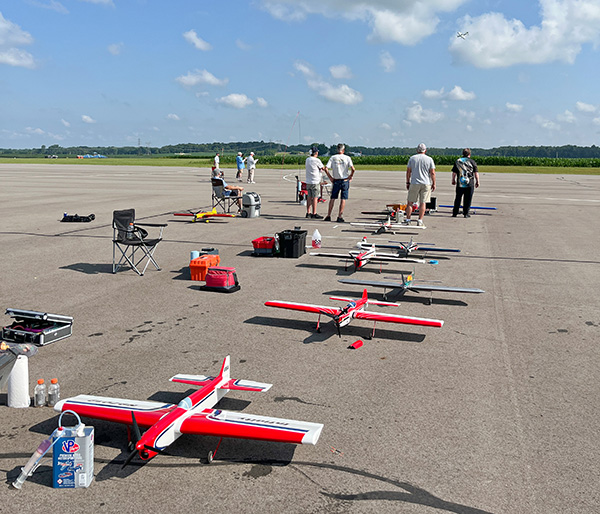
Competitive aeromodelers already know about the AMA National Aeromodeling Championships (Nats)—especially the events in which they participate. I suspect those folks have already skipped ahead to read about their favorite categories and see whether any records were broken this year. That’s okay because this introduction is not for them anyway. I am aiming for the sport pilots among us, the casual aviators who look forward to relaxing Sunday afternoons with a trusted model and like-minded friends.
I’ll be honest. I am one of those Sunday fliers who has never paid much attention to the Nats. Although I’ve been an active aeromodeler for most of my life, I have not competed in anything more challenging than the Inverted Limbo event at a local club fun-fly. Leisure flying is my thing, so I concluded that the Nats, our hobby’s most prestigious and longest-running competition, would only be interesting and alluring for competition-minded modelers. I was wrong!
This year marked my introduction to the Nats, and I subsequently underwent a giant shift in how I perceive aeromodeling competitions. I was invited to help coordinate NatsNews, a series of daily online reports covering the suite of events that comprise the Nats (see the "Sources"). This allowed me to observe many Nats events firsthand. Boy, did I learn a thing or two! If you are also one of those Sunday fliers, keep reading. You just might end up seeing things differently as well.
Defining the Nats
The Nats isn’t one event. It is actually a collection of events that spans several weeks throughout the summer. There are numerous Special Interest Groups (SIGs) within AMA that represent specific genres of aeromodeling. For instance, the League of Silent Flight is a SIG for RC Soaring activities. Another SIG, the North American Speed Society, is for Control Line (CL) Speed modelers. Many of these SIGs host their own Nats event, with competitions that are relevant to their particular type of modeling. It is the combination of these individual SIG-hosted events that comprises the AMA National Aeromodeling Championships as a whole.
I am fully aware that any attempt I make to convey all of the breathtaking moments, photo finishes, heartbreaking defeats, and triumphant victories of the 2025 Nats will fall woefully short. There was simply too much aeromodeling to absorb. I hate to say it, but the phrase "you had to be there" definitely applies to the Nats. This article merely skims the surface. It reflects my own personal observations, as well as input from several of the participants who also provided reports for NatsNews.
For more detailed information about any of these events, I encourage you to read the relevant NatsNews posts. You should visit the related SIG’s website as well. You can also find many more photos from the Nats in AMA’s Flickr gallery. Links for all of these resources are listed under "Sources" and the titles of each event.
Indoor FF (May 24 – May 26)
SIG: National Free Flight Society (NFFS; www.freeflight.org)
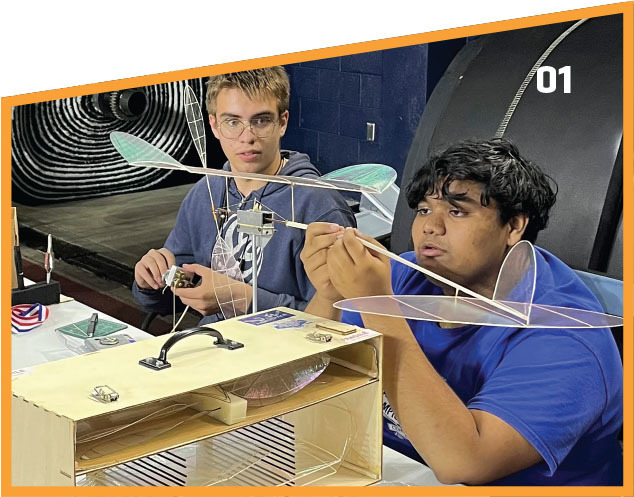
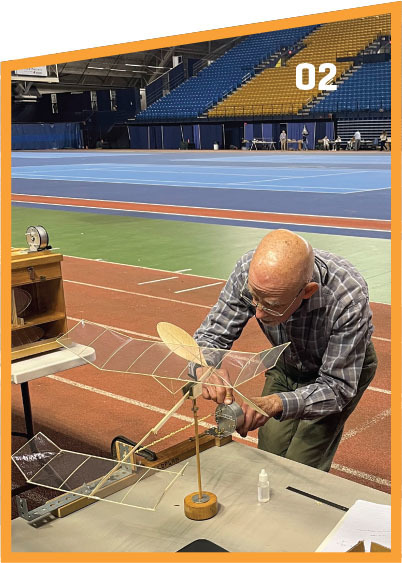
The first Nats event for 2025 was also the only competition that was not held at the International Aeromodeling Center (IAC) in Muncie, Indiana. Competitors for the Indoor Free Flight (FF) category gathered over Memorial Day weekend at East Tennessee State University’s Mini-Dome in Johnson City, Tennessee. They spent three days competing with a variety of gliders and rubber-powered models.
Don’t let the skeletal looks of these models deceive you. They are precise, highly engineered machines that do amazing things. Some of these airplanes can log flights lasting longer than 30 minutes! Let’s not forget that we are talking about FF models. The pilot has no direct control of the model after launch.
All of the Indoor FF competitions were scored based on flight duration. If your model flew the longest, you won! Although this competition took place indoors, the Mini-Dome was not a benign flying environment. There were still plenty of obstacles and conditions for these modelers to consider. There was the building structure itself, as well as scoreboards and hanging banners that had to be avoided. The building’s air handlers—or even just an open door—could create unwanted and unseen air currents within the structure. I was surprised to learn that the weather outside of the dome can have a significant effect on the flying conditions inside of it as well.
Of the 34 total competitors at the 2025 Indoor FF Nats, 10 of them participated in Youth categories. That bodes well for the future of FF aeromodeling. Kudos to the parents and mentors who are guiding these young competitors.
After completing 15 widely varied events, scores were tallied to determine the grand champions for the Indoor FF Nats. Caleb Finn is the Youth Junior National Champion. Dev Goda earned top honors in the Youth Senior division. The Adult Indoor FF National Champion for 2025 is Don Slusarczyk.
RC Pylon Racing (July 5 – July 11)
SIG: National Miniature Pylon Racing Association (NMPRA; www.nmpra.net)
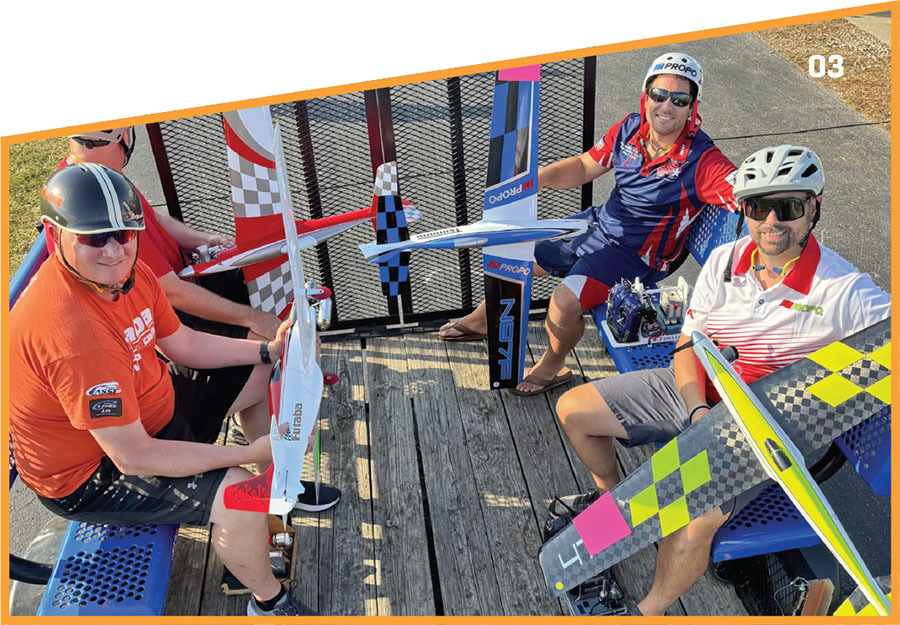
Activity at the IAC began ramping up in early July. One of the first events there was RC Pylon Racing. As you have probably guessed, this event was all about speed. The basic concept was that these slick models raced four-at-a-time around a triangular course marked by tall pylons. They took off and flew 10 laps as quickly as possible. Some pilots completed that task in a little more than 1 minute, at speeds of up to 200 mph!
It required a lot of people to make this event run smoothly. In addition to the race pilots and their callers, there were multiple lap counters and pylon judges positioned by the race course. The pylon judges watched to make sure that none of the racers took a shortcut inside of a pylon (resulting in a one-lap penalty). Additional personnel were required away from the race course. From the contest director, Doug Killebrew, to the tractor drivers who shuttled the competitors back and forth to the starting line, the RC Pylon Racing event was always a beehive of activity.
There were four classes of Pylon Racing at the Nats. Class 421 (Electric Formula 1) used only electric power systems. Competitors in Class 424 (Sport Quickie) could choose to use either an electric motor or a glow engine. Only glow engines were used in the fastest of the Pylon racers in Classes 422 (Quarter 40) and 426 (Super Sport Quickie). While there were individual winners for each class, the overall Nats champion for Pylon Racing had the best combined score in the 422 and 426 classes. This year’s Pylon Racing champion is Marcus Blanchard.
More than 400 racing heats were flown during the seven-day event. Despite all of this fast-paced action, very few crashes occurred. Doug reported that less than 20 airplanes were destroyed. Not only did these pilots fly fast, they kept it clean!
RC Helicopter (July 6 – July 8)
SIG: American Radio Control Competition Helicopter Society (ARCCHS; www.arcchs.org)
They say that all good things come in threes. That was certainly true of the Nats for RC helicopters this year. The event lasted three days. There were three types of competitions: F3C, F3N, and Scale. Furthermore, the F3C and Scale competitions each had three classes of entries.
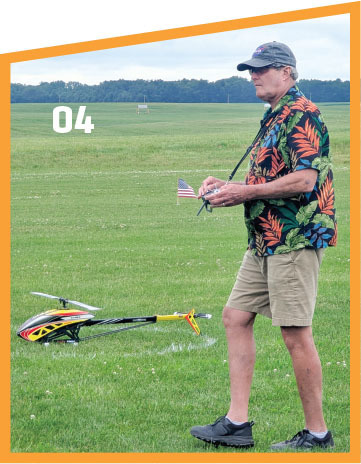

F3C was a contest for precision aerobatics. Each competition flight included complex hovering tasks and large aerobatic moves that covered a lot of sky. A panel of judges rated each pilot based on their precision, smoothness, and positioning as they executed the prescribed series of maneuvers (called a schedule).
The flights were mesmerizing to see. At the conclusion of the competition, Daniel Lucente won the Sportsman class, Brian Byrdsong won the Expert class, and Nick Maxwell was crowned the AMA Nats F3C National Champion.
The F3N competition was geared more toward 3D aerobatics. The pilots flew three different schedules. In the first, the competitors put together their own routine by choosing from a pool of maneuvers. The scoring for each maneuver was weighted based on its difficulty. In the second schedule (Freestyle), the pilots showcased their skills by flying any maneuvers they wanted during a flight lasting no more than 4 minutes. The final schedule was much like the second, but the flights were choreographed to music. Watching these top-tier helicopter pilots perform their Freestyle routines had me questioning the laws of physics! The 2025 AMA Nats F3N National Champion is Sean Miller.
Scale competition was also an aspect of the RC Helicopter Nats. Pilots could compete in AMA 518, Sport Scale, or Team Scale classes. All of the classes were graded based on static judging and flight performance. The pilots were expected to fly their models in a manner that accurately represented how the full-scale version would appear in flight. Emile Sheriff won the AMA 518 class, Gordie Meade took first place in the Sport Scale class, and Nick Maxwell and Darrell Sprayberry clinched the Team Scale class.
CL Precision Aerobatics (July 6 – July 11)
SIG: Precision Aerobatics Model Pilots Association (PAMPA; www.pampacl.org)
It is a good thing that I was not wearing a heart monitor as I watched the CL Precision Aerobatics competition. There were countless times when I was utterly convinced that a model was about to dive vertically into the tarmac at full speed, only to have the pilot coolly snap to level flight at shoulder height. I have completed a few aerobatic moves with CL models, but nothing like this. These pilots had nerves of steel and cat-like reflexes!
As the name suggests, the goal in CL Precision Aerobatics is to execute a series of aerobatic maneuvers as cleanly as possible. Panels of judges evaluate each flight and determine which pilots performed the best.
The pilots battled sun, wind, and even dense fog during the competition. Reporter Matthew Neumann commented on the particularly thick fog one morning: "I will always remember David Fitzgerald taking a practice flight in that fog. His engine quit just as his airplane was coming out of the fog bank. We saw it on its glide path for about a half a circle, and then it disappeared into the fog again."
One aspect of this event that I found particularly interesting was the Concours d’Elegance element, where all of the models are judged on their cosmetic appearance. There were many stunning models in this competition. Although the Concours points are a small percentage of the overall competition scoring, there were some instances where the appearance points made a difference in the final standings.
At the end of the week, Wesley Smith emerged as the winner of the Youth Junior division, while Gabriel Alimov took the top spot in the Youth Senior division. Orestes Hernandez also had a big week. He won the Open class, earned the top score in Concours judging, and added a sixth Walker Cup (overall champion) win to his resume.
CL Combat (July 7 – July 12)
SIG: Miniature Aircraft Combat Association (MACA; www.macasite.org)
As I watched the CL Combat events, I couldn’t help but feel like I was seeing some sort of computer-generated animation. The airplanes chased each other in circles at crazy speeds while making instantaneous direction changes that seemingly defied logic. Broad smiles indicated that the pilots were having plenty of fun, but my own facial expression conveyed slackjawed astonishment.
There were many different classes and competitions, but the basic premise of CL Combat was for two pilots to fly in the same CL circle. Each was trying to use their own model to cut the 10-foot-long streamer being towed by their opponent’s airplane. Whereas the RC Pylon Racing pilots took well-deserved pride in the low number of crashes this year, this camp seemed utterly unfazed by the frequent "thud" of another Combat model meeting its inevitable demise. That’s just the cost of doing this (really fun) business.
CL Combat was not all mayhem and balsa splinters, however. In fact, it took a lot of well-organized planning to even make this event possible. NatsNews reporter Bob Mears expressed his gratitude to the numerous Combat judges, event staff, and AMA employees who made this year’s Combat Nats run so smoothly. He has been around this event long enough to remember some previous years that were not always so trouble free.
The final competition of the week was AMA Fast Combat. According to Bob, "Some airplanes were hitting 130 mph and pulling on your arm like a whale on a harpoon. These monsters take some real concentration and muscle to maneuver."
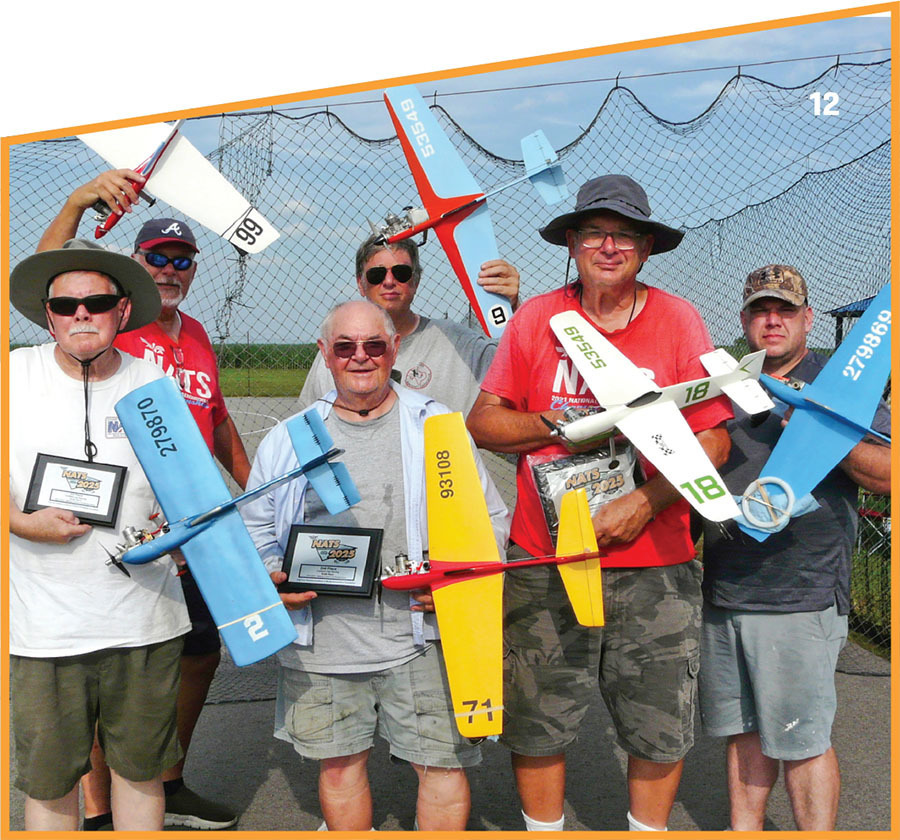
The 2025 CL Combat National Champions are Cary Minor (F2D), Jeff Johnson (F2D Fast), and Neil Simpson (Speed Limit, 1/2A, Big Block).

CL Racing (July 7 – July 10)
SIG: National Control Line Racing Association (NCLRA; www.nclra.org)
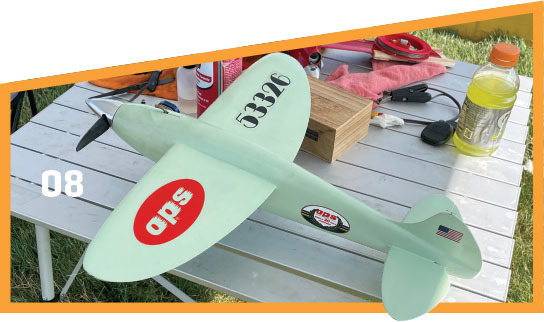
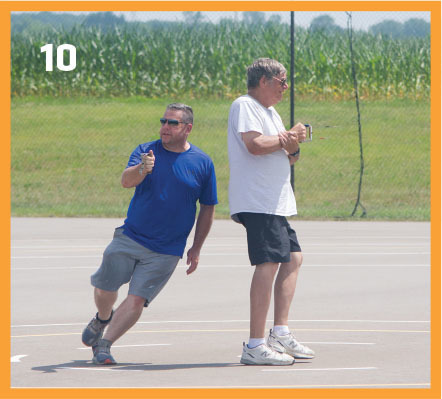
After being at the CL Racing circle for several minutes, I realized that I was watching the pilots more than the models. Sure, the airplanes were fast and thrilling to watch. The real show, however, was in the middle of the circle. In CL Racing, multiple pilots flew in the same circle at the same time. Each was trying to complete the requisite number of laps before the others. As all of this high-speed action was happening, the pilots shimmied and contorted to keep themselves and their control lines free of entanglement. It was almost like watching a modern dance recital (with the engines providing a really great soundtrack).
Some of the races were long enough that pit stops were required to refuel the models. The pilot’s goal was to glide the airplane to a stop in front of their pit crew—not an easy thing to do. The pitter then scurried to top off the fuel tank, restart the engine, and get the airplane ready for takeoff as quickly as possible. Once again, the coordination between the pilots and pit crews was impressive to see.
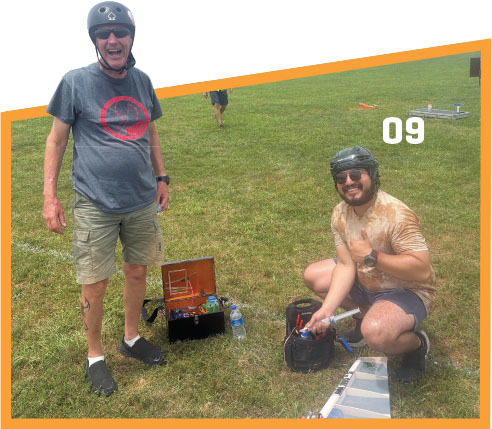
Several different classes of models were raced. Not all of the classes were intended to have blistering-fast airplanes. Some classes even had "slow" in the name. The idea was to fly the fastest within the rules of a given class. The winners for 2025 are Patrick Hempel (Mouse 1), Bob Oge (Quickie Rat), Richard Kucejko (Vintage B Team Race, AMA Goodyear/Super Sport Goodyear), and Bill Bischoff (AMA Slow Rat, Super Slow Rat, Sport Goodyear).
CL Speed (July 7 – July 11)
SIG: North American Speed Society (NASS; www.clspeed.org)
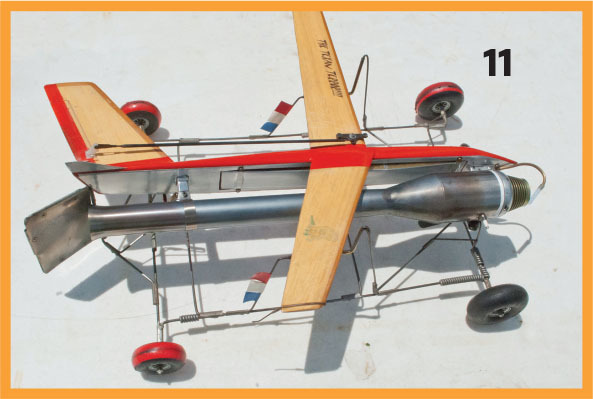
As a retired aerospace engineer, the physics of the CL Speed events really appealed to me. These models had ultra-streamlined profiles, asymmetric wings, single-blade propellers, custom launching dollies, or some combination of those features. All of those unique traits were incorporated to coax more speed out of these airplanes. Flight speeds of more than 100 mph were common, with some classes pushing 200 mph!
The engines at the Speed circle provided similar appeal. From screaming little 1/2A engines to larger two-stroke engines with tuned pipes and even pulse jets, these engines put out a lot of power—and sound! There was never doubt among anyone at the IAC when a Speed run was underway.
John Moll reported on the CL Speed event for NatsNews. He also answered my endless stream of questions about the models, control methods, flight strategies, the timing system, and more. It is certainly fascinating stuff for the mechanically-minded among us. My thanks to John for fueling my curiosity about this unique facet of aeromodeling.
While most of the classes at this event focused on all-out speed, that was not always the goal. In the Perky Speed class, each pilot was timed over a 16-lap run and their average speed was calculated. One of the subsequent awards was Best Av e r a g e Speed. This honor was presented to the pilot whose personal speed was closest to the average speed of all of the competitors. How’s that for a fun twist?
With the extreme speeds that these models flew, it was surprising to me that the margins of victory were often very narrow. One example was the 21 Sport Speed class. Both Bill Hughes and Glen Van Sant posted speeds above 143 mph. Bill snatched a razor-thin victory by flying just 0.2 mph faster.
The National High Point Champion Award was presented to the pilot with the highest cumulative score in at least four Speed classes. Bill and Glen were also neck-and-neck in this race. Bill won with a perfect score of 400 points, but Glen was right on his heels with 399.5 points!
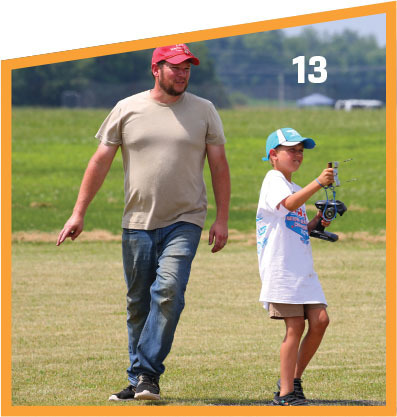
CL Navy Carrier (July 8 – July 10)
SIG: Navy Carrier Society (NCS; www.facebook.com/groups/840127569386742)
The CL Navy Carrier event has an interesting origin story. It dates back to the era when the U.S. Navy not only sponsored the Nats but also hosted the affair at Navy bases around the country. Navy brass wanted a suitably-themed flying competition to reflect their involvement. The resulting event emulates a mission flown from the deck of an aircraft carrier. Although the Navy is no longer involved with the Nats, the CL Navy Carrier event remains popular.
Considering that real aircraft carriers are in short supply in Muncie, the Nats competitors made do using an arced plywood deck dubbed the USS Small Fry. Pilots took off from the carrier and immediately flew seven laps as quickly as possible. Their next task was to fly seven laps as slowly as possible. The greater the difference in speed between the fast and slow laps, the more points a competitor earned.
During the slow flight segment, many pilots had their airplanes practically hanging on the propeller. This could get tricky because the rules state that a model may not exceed a 60° angle of attack. Yes, the judges can measure the angle of attack during flight with a drafting triangle!
The final task of a flight was to land back on the ersatz aircraft carrier. Maximum points were earned if the model snared an arresting cable with its tailhook and completed a successful landing on the first attempt. It was more challenging than it sounds.
There were several different classes flown during this event. While some classes used models that actually resemble full-scale carrier-based aircraft, that was not always the case. In fact, one class was based on the Sig Skyray, a CL Sport model.
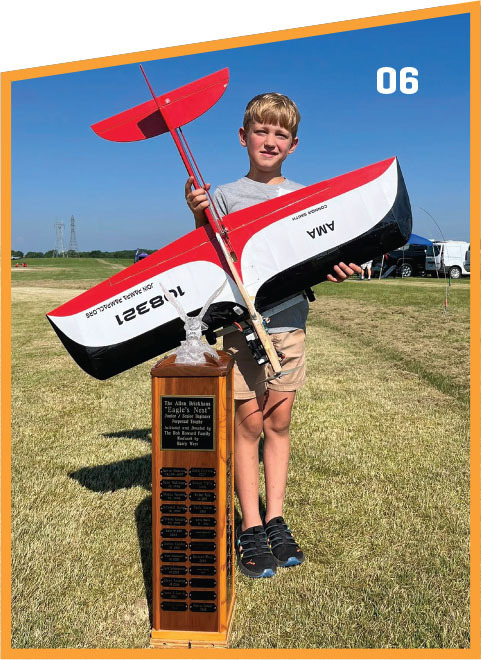
When asked about his impression of this year’s event, NatsNews reporter Melvin Schuette commented, "This year proved that model aviation is a family affair. The Smith family came from North Carolina to compete at the Nationals. Both David and his wife, Sarah, along with their two sons, Wesley and Connor, competed."
The coveted Eugene Ely Award was presented to the modeler with the highest combined score across several classes. This year, that honor was won by Youth competitor Angstrom Eberenz. Not only did Angstrom win, he set four records along the way!
CL Scale (July 10 – July 13)
SIG: National Association of Scale Aeromodelers (NASA; www.nasascale.org)
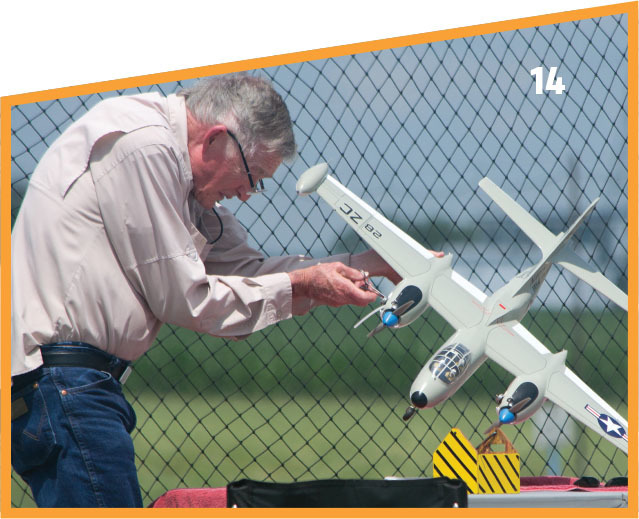
On my first visit to the CL Scale event, I ran into Keith Trostle and Bob Whitney as they were preparing their models for competition. I was enthralled by their airplanes and asked many questions. I was especially smitten with Keith’s scratch-built North American AJ-2 Savage, which was powered with two Norvel .061 engines. Keith and Bob could not have been more accommodating to me and my endless queries. My education about CL Scale was further enhanced the next day when I met up with NatsNews reporter Fred Cronenwett.
One of the things that I found very interesting was the variety of ways that the competitors chose to manage the throttle on their CL models. Historically, this was done with a third line in the control system. While some pilots still use the three-line method, they now have the option of utilizing a 2.4 GHz radio to actuate the throttle (or any function other than elevator control).
There were many variations with how the pilots incorporated radio systems into their CL flying. Some used a two-stick airplane transmitter attached to a radio tray. Others held a pistol-grip transmitter in their nonflying hand. I even saw a standard-looking CL handle that housed an integrated radio … clever stuff.
The models in this competition ranged from relatively simple 1/2A Profile replicas of World War II fighters to electric-powered civilian airplanes and large, four-engine military transports. There was no telling what incredible models you might see on the flightline.
The pilots within each class were ranked based on static judging and flight scores. Some flight maneuvers were mandatory for every pilot, while others were chosen by the modeler to showcase their airplane’s realism. High wind interrupted some of the flying, but they were eventually able to complete the required rounds.
Keith and his Savage won the 1/2A class. Fred placed first in the Fun Scale class. Top honor in the Profile Scale class was awarded to Paul Smith. Joe Gilbert and Ed Mason campaigned a large Lockheed Constellation to win the Team Scale class. Mike McHenry did very well, winning in Sport Scale, Authentic Scale, and being inducted into the CL Scale Hall of Fame.
RC Scale (July 10 – July 13)
SIG: National Association of Scale Aeromodelers (NASA; www.nasascale.org)
As I pulled up to the first day of the RC Scale event, I expected to find loads of exquisitely detailed models. I was not disappointed in that regard. Some of the models should have been behind a velvet rope in a museum, yet these works of art were fully functional flying machines. And boy, did they fly!
I was, however, surprised to see some airplanes that appeared to be off-the-shelf, factory-built models. I soon learned that the RC Scale Nats event (as well as other Scale competitions) includes numerous classes that encourage participation by modelers with many interests and skill levels. You do not have to be a master builder or an ace pilot to compete.
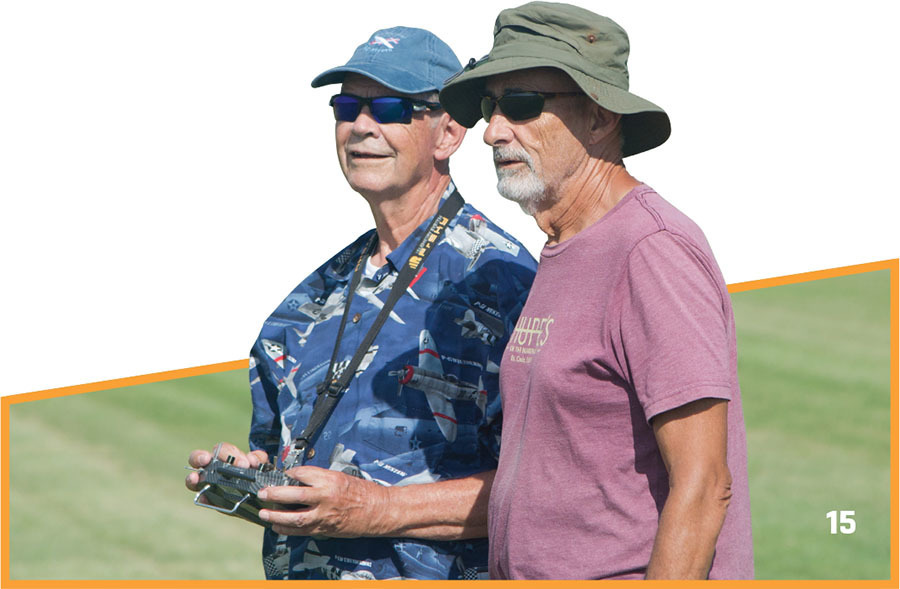
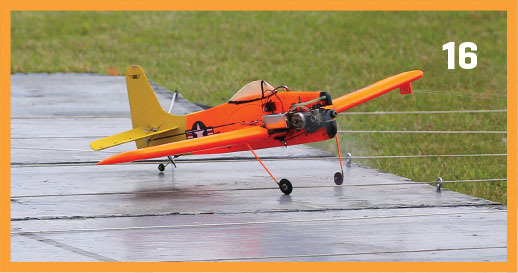
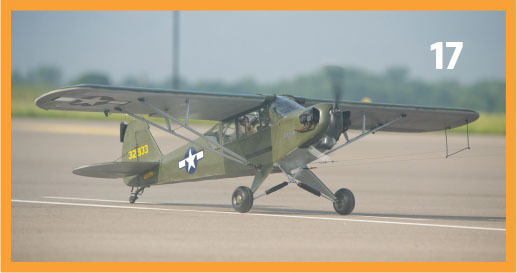

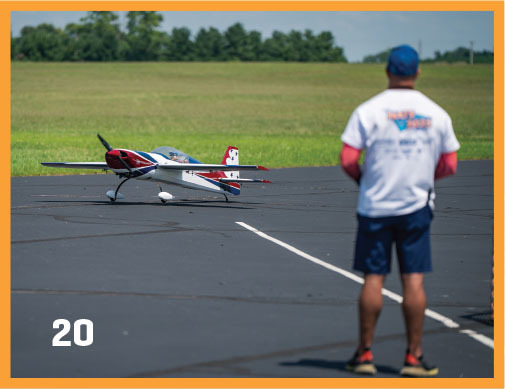
Some classes required only rudimentary documentation for the static portion of the contest. Competitors in other classes had well-organized binders with documents relating their model to the full-scale airplane it represented. There were similar variations in how close the judges could be as they graded each model.
The flight rounds really highlighted the tremendous variety of subjects that were represented here. Any time you looked skyward, you might see a Pioneer-era airplane sharing the sky with a Giant Scale aerobat or a turbine-powered jet. Keith Numbers even brought a Pitcairn PCA-2 autogyro. That was certainly unique.
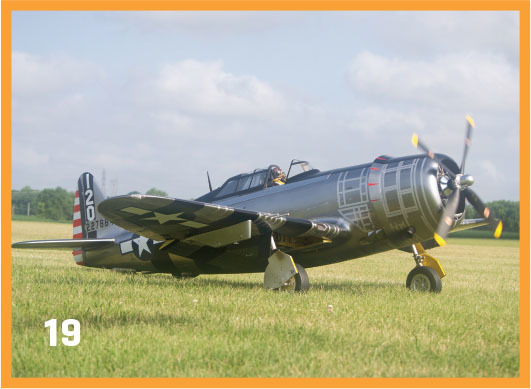
There were numerous models of WW II fighters, including a pair of P-47 Thunderbolts flown by the father/son team of Bill and Kaleb Spencer. Kaleb’s Jug was simply stunning. It had a 112-inch wingspan and sported a natural metal finish. Kaleb flew the model extremely well.
All of the pilots with whom I spoke were eager to tell me about their models. I especially enjoyed my conversation with Peter Fynn and his brother, David. Peter designed, built, and flew a gorgeous rendition of the Miles Southern Martlet, a somewhat obscure (but very beautiful) British biplane from the 1920s. He explained how he used traditional balsa building techniques, along with 3D-printed parts and other contemporary methods, to create his masterpiece.
There were simply too many classes at this event to list all of the winners here. Check the NASA website for complete scores.
RC Soaring (July 16 – July 27)
SIG: League of Silent Flight (LSF; www.silentflight.org)
RC Soaring was the longest Nats event by far: a whopping 12 days! During that time, these pilots participated in a widely varied range of competitions. The first event was Cross Country Soaring, where the competitors flew their unpowered gliders literally miles away from the launch point by skillfully riding thermals. The pilots rode in the bed of a pickup truck, driving down country back roads to keep their airplanes in sight. Imagine the thrill of completing one of these long-distance flights. It was also sometimes thrilling when pilots did notmake it back to the launch site. One model had to be retrieved from a bull’s pasture!
Hand in hand with the many types of Soaring contests that were hosted were the differing types of models that were flown and the methods for getting these aircraft aloft. Some events used traditional balsa gliders with a 2-meter wingspan. Other events dictated much larger models constructed of composite materials.
In some cases, pilots used a hi-start to launch their models skyward. A hi-start is essentially a long section of stretchy surgical tubing with a leader attached to it. Other times, ground-based winches were used. These powerful electric motors would easily pull the wing off of a glider if the pilot wasn’t careful. In the Altitude Limited Electric Soaring (ALES) contest, the airplanes had onboard brushless motors with folding propellers. A sensor inside the airplane would automatically shut down the motor when the designated altitude had been reached. Let’s not forget traditional muscle power. In the F3K competition, pilots whipped their airplanes to incredible heights using the discus-launch method.
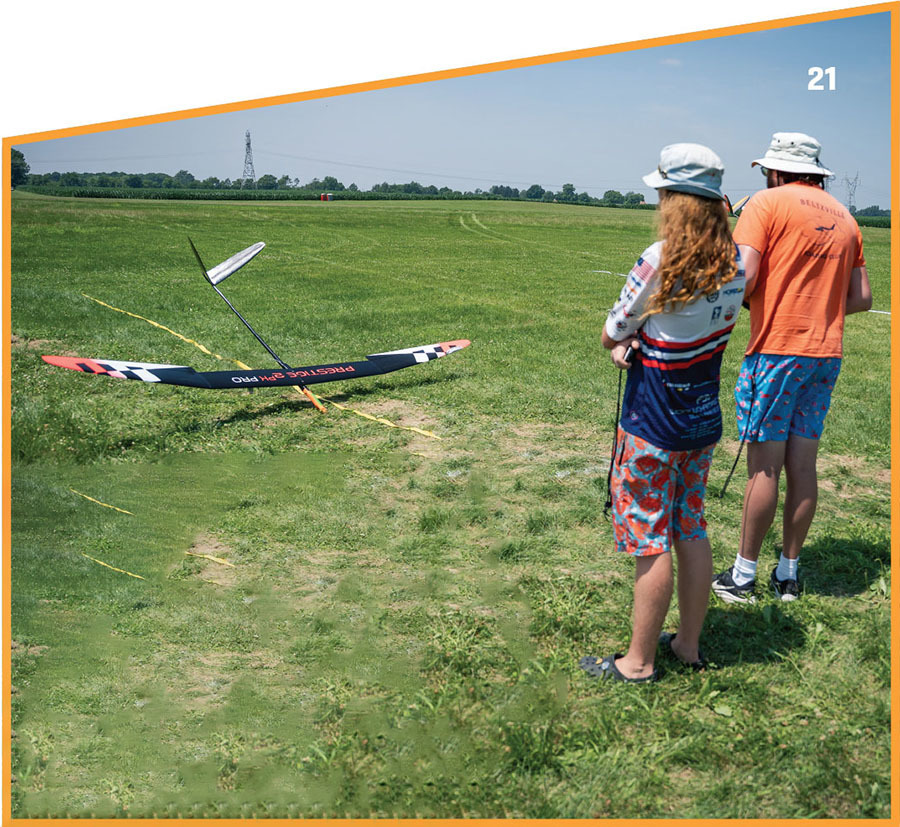
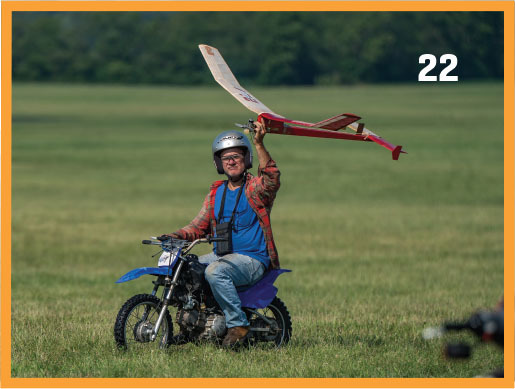
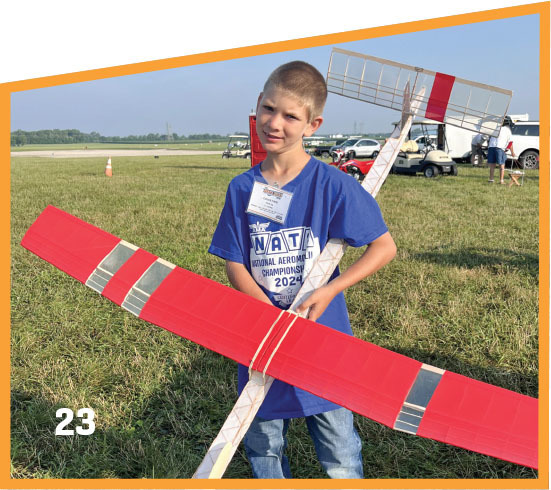
The most successful competitors were able to "read" the air to find lift and avoid sink. Some of the contests also had a spot-landing element. This required pilots to precisely manage their model’s energy all the way to the ground. Their ability to land at an exact location was stunning.
Visit the LSF website for a full list of the events and results. I also encourage you to read the NatsNews reports from the Soaring competitions. Reporter Mike Bergerson’s enthusiasm for the RC Soaring Nats (he calls it "Glider Camp") is infectious.
Outdoor FF (July 21 – July 25)
SIG: National Free Flight Society (NFFS; www.freeflight.org)
Similar to RC Soaring, the Outdoor FF Nats was notable for the sheer variety of contests that it offered to the competitors. The common goal with every contest was to achieve the longest flight possible, but there were many variations on that theme. Some of the contests involved gliders launched with rubber band catapults. There were also models with onboard power, whether it was a rubber band, electric motor, or glow engine. If you can’t find a segment of Outdoor FF that interests you, you’re just not trying!
Another notable aspect of this event was the significant number of younger contestants. We should all take a page from their playbook for getting youth involved in the hobby. In fact, Youth Senior contestant Skilly DeLoach wrote many of the NatsNews reports for Outdoor FF.
The performance of these models was incredible. The rubber band-powered models seemed to float effortlessly, as though they were filled with helium. The glow-powered models were reminiscent of Dr. Jekyll and Mr. Hyde. They screamed upward in a rapid vertical climb, and then settled into a silent, gentle glide back to the ground after the motor stopped.
The Outdoor FF Junior National Champion for 2025 is Caleb Finn. In the Senior category, the National Champion is Dev Goda. There were many other awards and honors bestowed during this event. Visit the NFFS website for a complete recap of the standings.
RC Scale Aerobatics (July 28 – August 1)
SIG: International Miniature Aerobatic Club (IMAC; www.mini-iac.org)
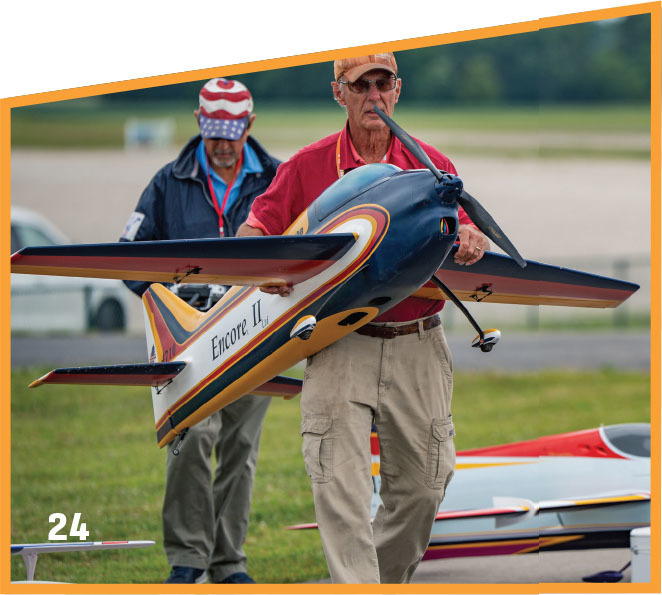
At the RC Scale Aerobatics event, contestants flew models that represented aircraft you would see at a full-scale International Aerobatic Club competition. The Extra NG seemed to be a popular aircraft among the contestants this year. These were typically large models, with wingspans exceeding 100 inches and powerful, multicylinder gasoline engines in the nose.
More than 50 pilots were registered to compete. This reflected an uptick in participation compared with previous years. For Kurt Koelling, 2025 was his 25th consecutive RC Scale Aerobatics Nats. Now that’sdedication!
There are five classes within IMAC: Basic, Sportsman, Intermediate, Advanced, and Unlimited. The top pilots compete in the Unlimited class. All of the pilots flew a Known sequence of maneuvers that is consistent for all IMAC competitions throughout the year. Some classes also included an Unknown sequence that was not revealed to the pilots prior to the Nats. A panel of judges graded how well the pilots performed their maneuvers.
There was also a Freestyle class, where pilots were not constrained by a catalog of required maneuvers. They could do whatever they wanted and have their flight choreographed to music. These pilots performed maneuvers that you wouldn’t believe were even possible!
Santiago Perez had an incredible event. He placed first in the Unlimited and Freestyle classes, as well as earning the Bennett Cup. The Bennett Cup is awarded to the pilot with the highest percentage score throughout the contest.
The criteria for the Schroder Cup is similar to the Bennett Cup, but it is intended for a Youth competitor. This award is given in memory of John Schroder, who promoted youth involvement in Scale Aerobatics. The winner of the Schroder Cup this year was Bryson Dalusio.
RC Aerobatics (August 19 – August 22)
SIG: National Society of Radio Controlled Aerobatics (NSRCA; www.nsrca.us)
The models flown in RC Aerobatics (Pattern) competition were not Scale aircraft in any sense. They didn’t even accidentallylook like any full-scale airplane! These models reflected the state of the art in Pattern aircraft design. They were designed with one goal in mind: to fly clean precision aerobatic routines.
Many of the models were sleek biplanes with slender, tapered wings and composite construction. Although it was not a requirement, all of the competing airplanes were electric powered. Some power systems had a single propeller. There were also many that utilized a contrarotating configuration with two propellers spinning in opposite directions.
Five classes competed at the Nats: Sportsman, Intermediate, Advanced, Masters, and F3A. The event utilized several flying sites at the IAC so that multiple classes could compete concurrently.
Poor weather prevented any flying at all on one day. Even when the contestants were flying, they often had to battle a significant crosswind. This was definitely a test of their skills to keep the flying sequences clean and to stay within the prescribed aerobatic box.
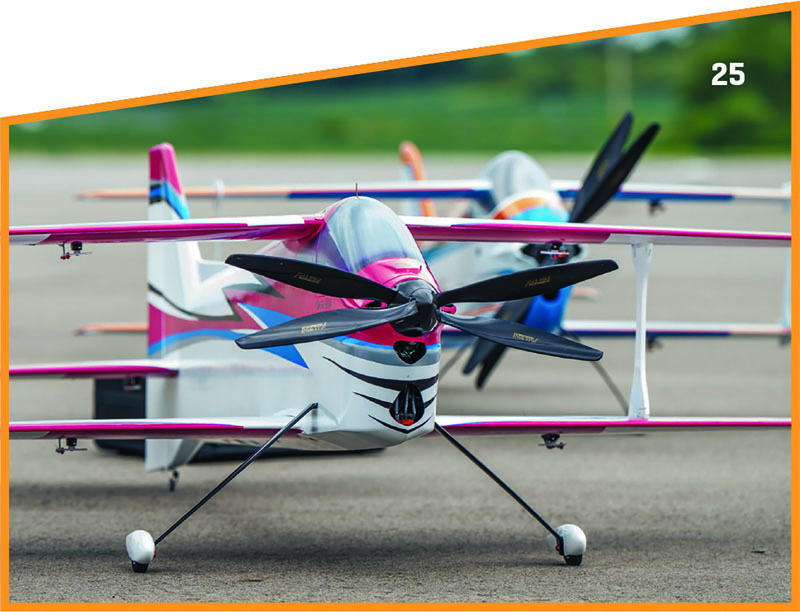

In the F3A class, A.C. Glenn and Joseph Szczur battled for the lead all week. Both pilots logged multiple perfect scores. In the end, Joseph pulled ahead by a small margin to become the national champion.
Dave Lockhart flew three perfect rounds in the finals to defend his title as the Masters class champion. Arthur Dailey won the Advanced class, with Michael Cohen and Richard Afflerback right on his heels. James Thomas finished first in the Intermediate class, and Ron McGrath won the Sportsman class. Both James and Ron received perfect scores in every round!
Seventeen-year-old Kasey Johnson traveled from Minnesota to compete in his first Nats. He performed very well, finishing second in the Sportsman class and earning the Best Senior award.
Consider Competition
While there were many widely varied activities throughout this year’s Nats, I found that some things were very consistent. First, all of the participants with whom I spoke were unanimous in their praise of the countless volunteers who made the Nats happen. I will echo that admiration here. It takes a veritable army of people working together to pull off all of these contests. I offer a sincere thanks to all of the volunteers, especially those who come back year after year to keep the Nats going.
Another thing that I learned as I chatted with people is that the Nats is a friendly place. While the events are rooted in competition, sportsmanship and camaraderie prevail. Everyone I spoke to was very welcoming. Many also urged me to consider returning to the Nats as a competitor. I am seriously considering that option. You should too!
Next year marks the 100th Nats. What better way to celebrate this milestone than to become a part of it?
SOURCES:
AMA Flickr Gallery
www.flickr.com/photos/modelaircraft/albums/72177720328661934/


Comments
Add new comment