Photos courtesy of HMAC and NCSU
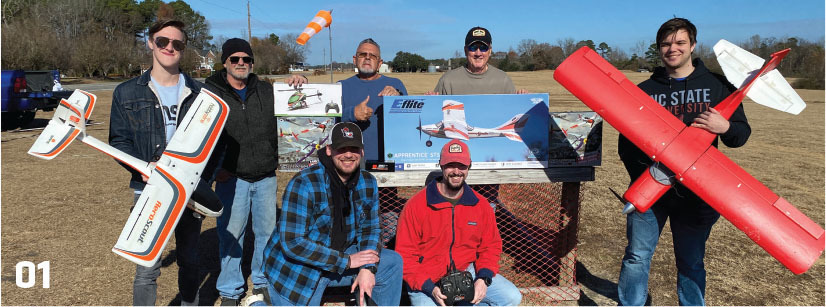
On most Sunday afternoons when the weather is nice, RC model aircraft fill the sky above Harnett Mini Aero Club (HMAC) on Red Hill Church Road just outside of Dunn, North Carolina. The membership of HMAC ranges from youth to adults and experienced pilots to beginning pilots, all flying a wide range of model aircraft.
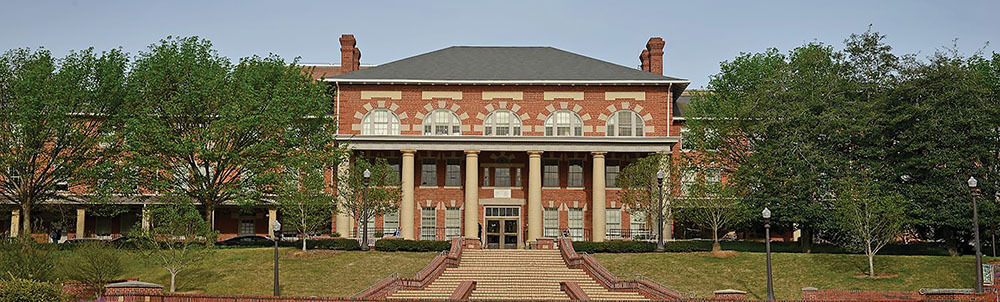
HMAC is sanctioned by AMA. Both promote education in aeromodeling, growing the sport and hobby, and now HMAC has partnered with North Carolina State University (NCSU) and the Department of Mechanical and Aerospace Engineering (M&AE).
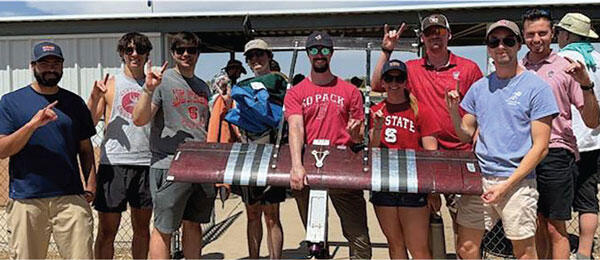
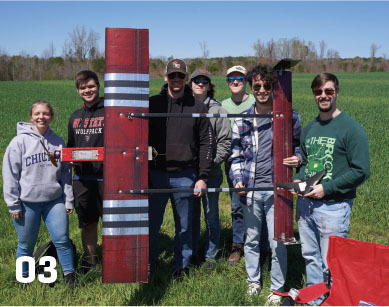
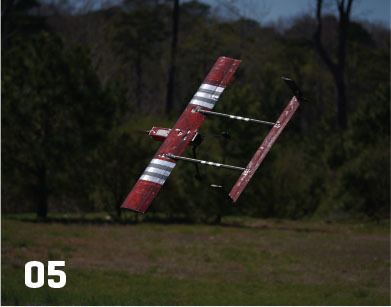
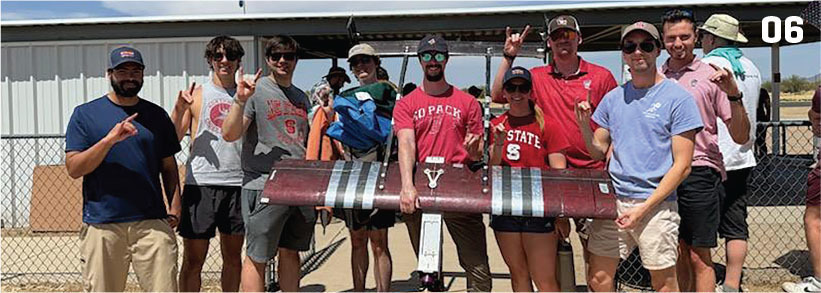
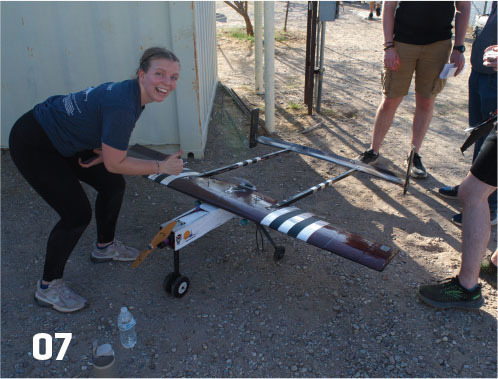
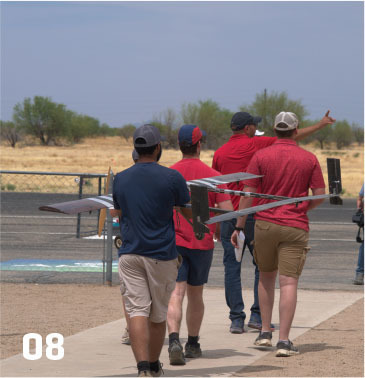
NCSU M&AE students—the Wolfpack Team—worked to design and build a prototype model airplane and entered the American Institute of Aeronautics and Astronautics (AIAA) Design/Build/Fly competition. This global university competition was held in April 2025 in Tucson, Arizona. In design, the NCSU student project placed first out of 159 universities around the world; now the students had to build the model and fly it.
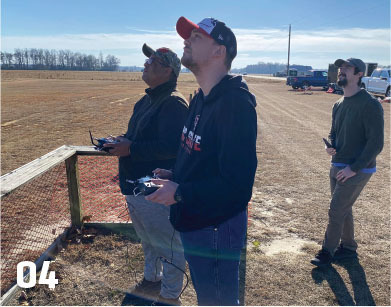
In the early stages, the students faced challenges in having a safe location to fly their model and proper instruction on just how to safely fly a model aircraft. The NCSU students reached out to HMAC and a partnership was born.
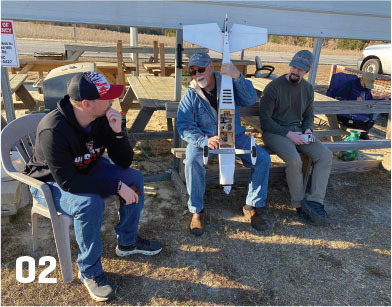
In December 2024, the flying club welcomed the students so that they could have a testing ground, flight school, and a research lab. Members of HMAC began teaching engineering students about safety, the mechanics of aeromodeling, and giving flight instruction on HMAC’s club trainer airplane.
Members of the club, along with sponsors (Expert Jewely Repair; Hayes Hobby House in Fayetteville, North Carolina; and Raleigh Hobby) were soon able to donate a number of models, radios, batteries, and everything the students needed to get proper flight instruction and experience as they worked toward their competition in April.
The students made amazing progress. "All we had was a radio-controlled flight simulator on which to learn to fly, and now we have models, we are flying safely, and at a great AMA-sanctioned flying site," said NCSU senior Galen Day, who is one of the student design team pilots. Jake Russell, who is also a pilot for the NCSU team, tried to fly their original prototype and it didn’t go well. "We crashed and that’s when we decided we better seek some help and we reached out to Harnett Mini Aero Club," he said.
In just their second weekend at HMAC, the student pilots were soloing on one of the models donated by HMAC. Other members of the NCSU design team were learning about the electronics, structural integrity, and other elements of aeromodeling, which they were able to incorporate into their design.
Ronnie Woodall, who is president of HMAC, shared that the members were as excited to be a part of this partnership as the NCSU students were to be at HMAC. "We love teaching anyone about aeromodeling, HMAC, and AMA. We can learn from them, and they can learn from us."
The partnership with the NCSU M&AE department and HMAC is already such a success that both hope it continues in the future. Andy Tutor, vice president of HMAC, said, "When these students graduate in May, the next group of students can come in and we can also teach them. They are the future of our sport and hobby and now they have the models and equipment they need on which to learn."
The AMA sanctions the AIAA global university competition. It was held at the Tucson International Modelplex Park Association (TIMPA), which is also an AMA-sanctioned flying site and club.
Flying, testing, and learning at HMAC will be key for the NCSU students, said HMAC member Dan West. "The layout at HMAC is virtually the same as TIMPA. Our flying field is clear on each end of the runway, our runway is essentially the same length as TIMPA, and our overall layout is similar, so the students can practice, test, and fly all of their missions here at HMAC before they go to Tucson for the competition."
The NCSU students completed their maiden test flights of their prototype in early January at HMAC. The first four flights went extremely well, and the students learned a lot about how to enhance their design and make improvements.
Throughout the winter, the NCSU students and HMAC members worked together. With each flight, the students learned and improved their design. On their final test flight, the weekend before the competition in Tucson, disaster struck. Their model had an aileron malfunction that resulted in a flight failure and destruction of the model.
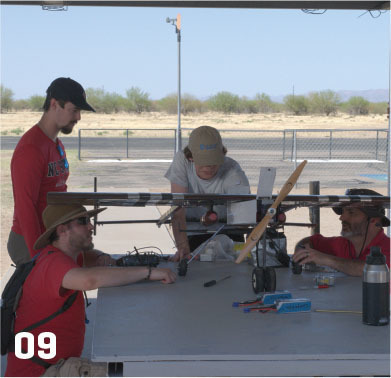
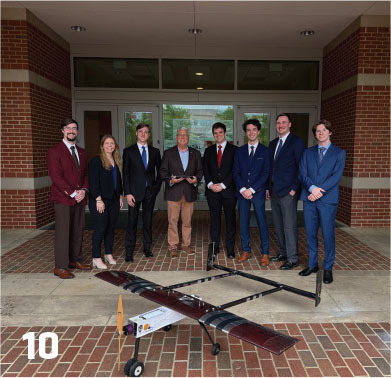
The students worked around the clock in their lab on campus to repair the model and get it ready for the competition that started in just four days, and they did! In Tucson, despite windy conditions, the Wolfpack Team had its best showing in school history! Again, on paper, design, and proposal, the NCSU team was ranked first out of 159 universities. At the flying portion of the competition, 97 universities made it to TIMPA and took to the air. The Wolfpack Team finished in 30th place overall.
The first-place winner was FH Joanneum University (Graz, Austria). The top finishing university from the US was California’s Santa Clara University team that finished in third place.
The outstanding performance and partnership between HMAC and NCSU has led to a partnership that has grown into a relationship, where future NCSU aerospace and mechanical engineering students will continue to learn and grow in both the classroom and at the flying field and help in the growth of aeromodeling. The next group of NCSU students is already preparing to take to the air at HMAC to train for next year’s competition.
NCSU students and staff now regularly come out to HMAC on weekends for fun, flying, and fellowship. Enjoying our fabulous sport and hobby, the next group of NCSU students are already ahead in the game for next year’s competition.
SOURCES:
AIAA Design/Build/Fly


Comments
Add new comment