Timeless advice for newcomers

When I was first learning to fly RC airplanes, new pilots were expected to buy (and build) a boxy, high-wing balsa model with a glow engine. I can’t complain because this approach worked for me. Modern-day newcomers have a lot more options for their first model. With ARFs, foamies, electric power systems, gyros, and other innovations, picking a model can be daunting. This article will help guide rookie fliers to the choice that is right for them.
Cart Before the Horse
Before answeringthe question of which model to buy, you should first consider whether you are even ready to ask the question! I believe two other elements are more critical than the aircraft in determining a beginner’s success. Getting those things squared away beforehand will set you on the right path and might also influence the model you ultimately choose.
The first critical element is finding help from an experienced modeler. I can’t overstate how much this benefits newcomers. Yes, some rookies do teach themselves to fly. Most of them, however, will tell you stories about battered airplanes and expensive lessons that have been learned. The fact is that most people who are new to RC flying do not know all of the right things to focus on. How could they? Diving into the hobby in a bubble can leave a lot of important variables to chance (i.e., center of gravity, control throws, flight modes, etc.). The guidance of a veteran flier will help push you over those initial hurdles without having to learn things "the hard way."
Most RC clubs have a program to train new pilots at no cost. Check the clubs in your area and see what they have to offer. Even if you do not join a club, you should try to enlist the help of an experienced flier. At a minimum, they can make sure that your model is airworthy and get it trimmed for you. It is even better if they are willing to fly with you and provide feedback. Most transmitters have a buddy-box feature that allows an instructor to assume control of the model when the student gets into trouble.
The second helpful element is simulator time. Computer-based RC simulators are fantastic tools for learning rudimentary flying skills (and beyond). Is flying on a simulator exactly like flying the real thing? No, but it is pretty darn close! I have had students who have invested a lot of simulator time up front and needed little, if any, assistance on their maiden flight with a real RC model.
The biggest appeal of using a simulator is that it removes the primary anxiety that most fledgling pilots have: ruining an airplane. There is no carnage with a simulator, so students can practice their skills in a more relaxed environment. Simulators also allow you to log a lot of flight time, no matter the weather conditions.
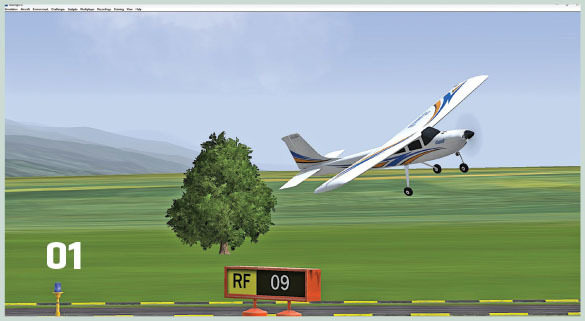
It is worth noting that simulators are helpful for RC pilots only if they simulate RC flying (versus simulators for full-scale flying). The perspective of being removed from the cockpit is an essential element. It is also important to use a controller that emulates an actual RC transmitter. Flying via a keyboard or game controller will not teach the muscle memory that you need to become proficient with the real thing.
Choosing Your Model
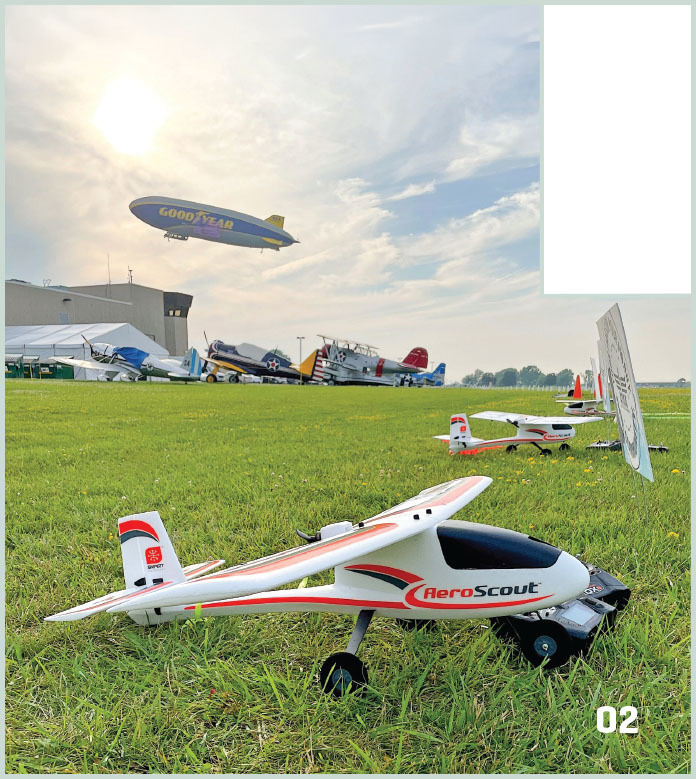
Once you have an instructor and a simulator lined up, choosing your first model will probably be very easy. I recommend that you ask your instructor which model they suggest. They might have a particular airplane that they are most comfortable teaching with, or a brand of models that are compatible with their buddy-box equipment. Follow their guidance. You will be pushing your own comfort zone as you learn to fly. There is no advantage in pushing your instructor’s comfort zone at the same time.
There is a decent possibility that you might not even need to buy a model right away because many RC clubs have their own aircraft that they use for basic flight training. By the time you graduate from the club trainer, you might be ready for something slightly more advanced. Again, ask your instructor for guidance.
Once you are ready to pull the trigger on purchasing your first aircraft, see what models are for sale within the club or in your surrounding area. You can often find great deals on used beginner models as last year’s rookie pilots step up to more-advanced aircraft. Just be aware that the phrase "good condition" means different things to different people. Trainer aircraft tend to live hard-knock lives; some of them that you find on the used market are in rough shape. It’s okay to be picky.
In my experience, most rookies prefer to buy their first model as new-in-the-box. Going this route helps ensure that your aircraft is in tip-top shape and fully functional. The only potential negative aspect of flying with a new model goes back to that pesky anxiety. People are afraid of pranging their shiny, perfect airplane and get overly nervous about flying it. That feeling tends to subside, however, as the inevitable dings and scratches start appearing.
When it comes to choosing design aspects, such as glow/electric power or balsa/foam construction, the decisions are a matter of personal preference. Each choice has positive and negative attributes. At the end of the day, the propeller doesn’t care what kind of motor is spinning it and the air doesn’t care what material the wing is made of. Go with what you and your instructor are comfortable with.
Be sure that you choose an aircraft that is intended for beginning fliers. Do not buy a pointy EDF jet or a model capable of 3D aerobatics and expect it stay in the air for long. Be honest about your skill level and get something relatively slow and docile. I promise that your training flights will not lack excitement! You will be moving up to those advanced models before you know it.
The Gyro Question
Many beginner-friendly models now come equipped with a gyro stabilization system, such as Sensor-Assisted Flight Envelope (SAFE) technology, which is found in many aircraft from Horizon Hobby, as well as the Reflex V3 in some FMS models. There are minor differences, but these systems function in essentially the same way: When the stabilization feature is engaged (using a switch on the transmitter), it prevents the model from banking, climbing, or diving too steeply. This helps notoriously heavy-handed beginner pilots to avoid over-controlling their model. If the pilot still manages to get into a bind, they can simply release the control sticks and the gyro will quickly bring the model to straight-and-level flight.
I think that these gyro systems are certainly useful tools for training new pilots. All of the models that I currently use for training are equipped with them. As I have mentioned with other things, I find that the gyro systems tend to make fledgling pilots less nervous about crashing. That is always a good thing.
It is important to understand that a gyro is a tool rather than a magic safety net. This tool will be helpful to you only if you understand how to operate it and you recognize what functions it is providing for you. This is especially true as you continue to build skills after you cut the cord from your instructor’s buddy box.
For instance, I have seen numerous gyro-equipped models crash soon after takeoff because the pilot mistakenly had the gyro turned off and they didn’t check it in their preflight routine. Similarly, I have seen pilots make one small error and subsequently fly their model into the ground, all while the gyro is active. They got flummoxed and forgot that they could just let go of the sticks to get out of trouble.
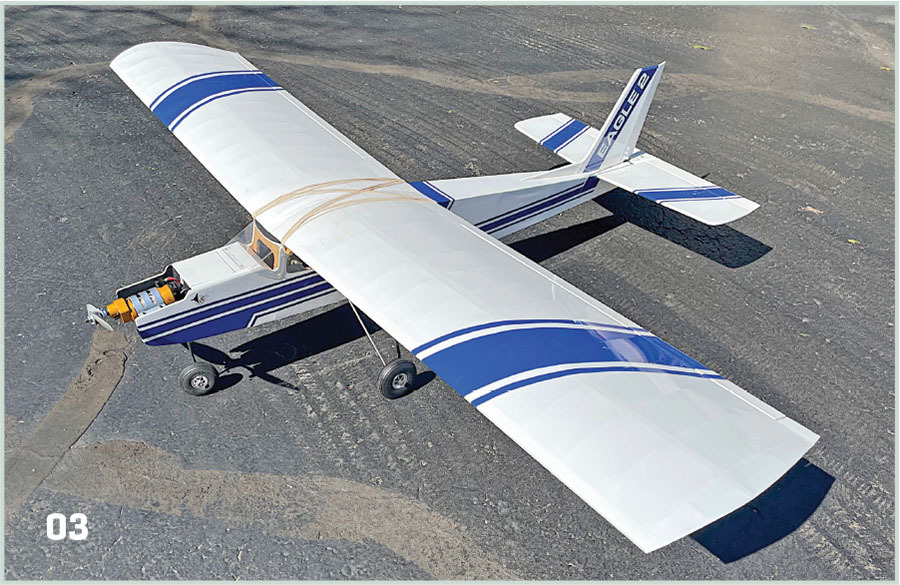
As an instructor pilot, my stance is that a gyro is a great learning tool and you should utilize it if your model is equipped with one; however, I do not think that it is necessary. If you have an instructor and a simulator, don’t pass up a good deal on a trainer just because it does not have a gyro. Heck, even those boxy balsa trainers from decades ago can still be perfectly valid today as first models!
The First of Many
This article is written with powered, fixed-wing models in mind. I’m not qualified to give advice to beginners who are interested in helicopters, multirotors, gliders, and other types of RC flying machines. I am confident, however, in suggesting that utilizing an instructor and a simulator are always good ideas.
With a little guidance and the right practice, there are many valid choices that will work well for your first airplane. If you are anything like me and my flying buddies, your first model will be followed by dozens—maybe hundreds—more. Welcome to the hobby!
SOURCES:
FMS
HobbyZone
Horizon Hobby
RealFlight


Comments
Add new comment