By Dave Garwood
Photos by the author, except as noted
As seen in the January 2000 Model Aviation.
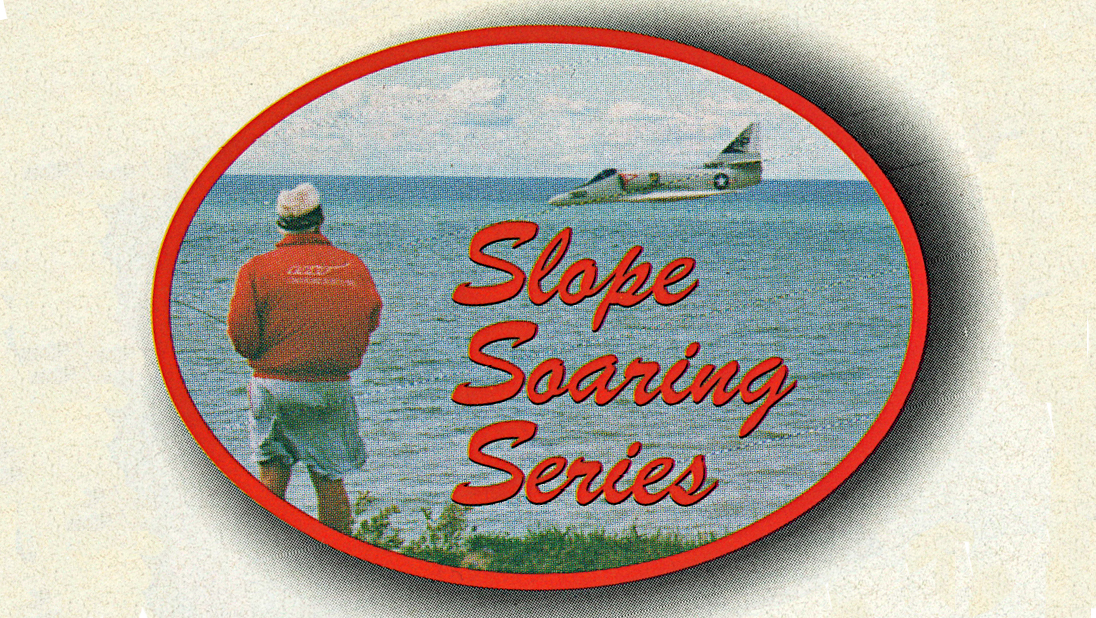
Slope Soaring is seen by some as an arcane branch of RC flying, practiced by weirdos and misfits, far away from town, outside the mainstream of RC aeromodeling. While these characteristics may be demonstrably true, Slope Soaring rivets the interest of its practitioners and perpetuates a diehard following just as committed as those in other specialized forms of RC flying.
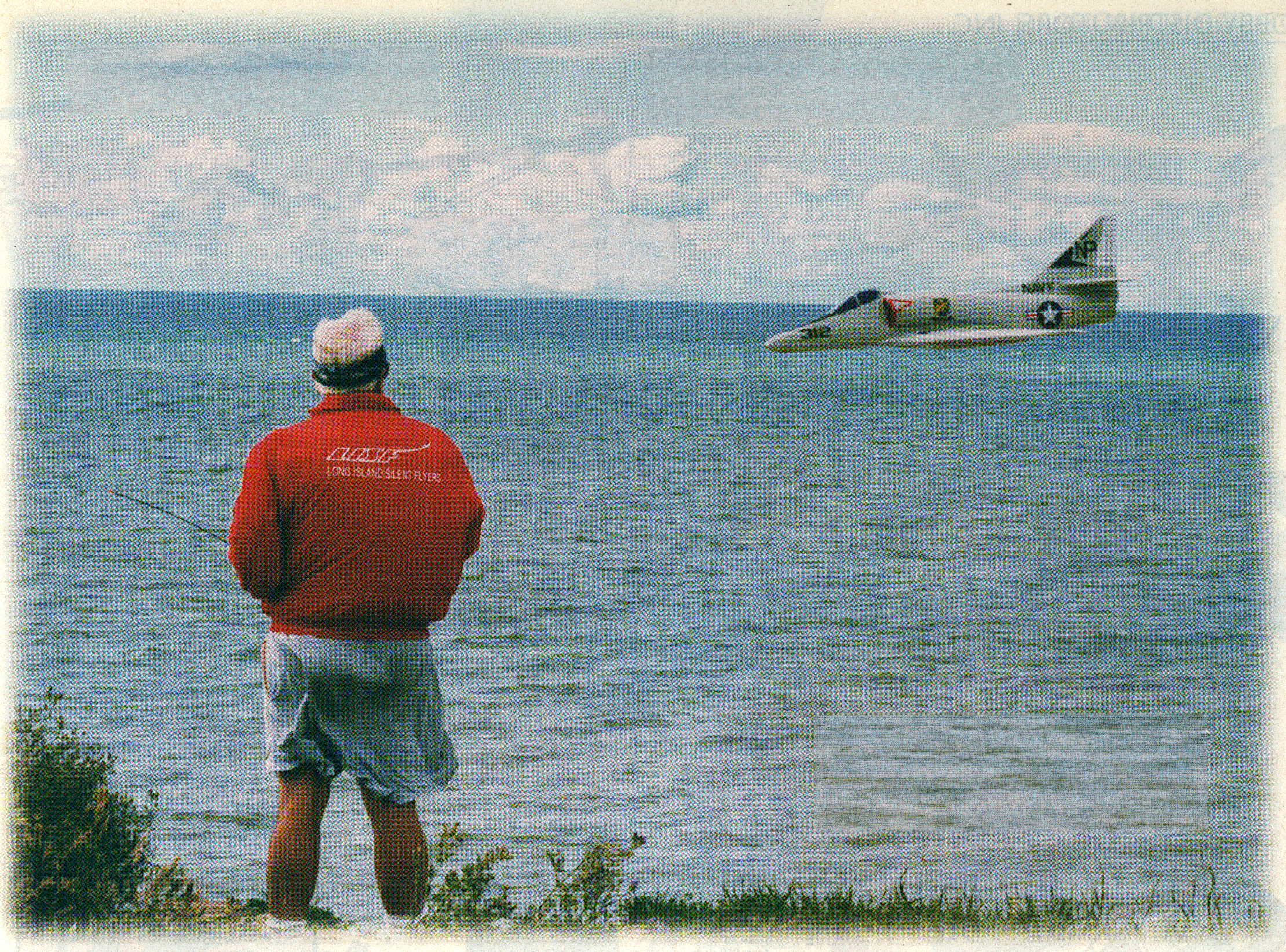
Slope sailplanes are still the fastest airplanes in aeromodeling ("Fastest Model Ever Flown" Model Aviation, August 1978), yet the lightest and most-delicate RC sailplanes can fly for hours on a breath of slope lift. A Slope pilot can get started with a $19 HLG [Hand-Launch Glider] kit and a $79 radio, or they can spend $2,000 on a long-span Scale sailplane that's too big to launch from a winch.
Some RC sailplane pilots fly their Thermal Duration airplanes peacefully in light slope lift, happy to have an extended flight free from the task of searching for thermals. Others fly heavy specialized Slope models in raging winds through aerobatic routines that include every maneuver seen in Pattern flying except unlimited vertical flight, and maneuvers that require engine torque to complete.
The purpose of this series is to provide a foundation for those who have not tried Slope Soaring, to expand your knowledge of Slope site finding techniques, to explore the types of Slope airplanes available, and to offer a glimpse at what extreme slope pilots can do with an unpowered model when they're really on top of their.game.
How Slope Lift Works: Gliders are always descending when flying, relative to the air mass surrounding the airplane. For sailplanes to have extended flights, they must fly in rising air. Thermals provide rising air to support hawks, buzzards, and thermal sailplanes. Wind blowing against a hill flows up the hillside and provides lift for gulls, pelicans, and Slope sailplanes.
We need wind to fly Slope. While the wind blows, a flight can last as long as the radio batteries hold out. It's possible to fly gliders in wind speeds from five to 50 mph, although the most practical conditions are from about eight to 30 mph. As wind speed increases, Slope Soaring pilots bring out heavier and faster sailplanes, and these begin to fly more like powered airplanes, and less like sailplanes.
Wind blowing into the slope is forced upward and creates a lift band above and out in front of the hill. How high it goes up and how far it goes out can be determined by experimentation, by watching soaring birds, or by watching other sailplanes if they are flying at your site.
Generally the lift band reaches twice the height of the hill and extends outward a distance about equal to the height of the hill. These dimensions vary with the shape of the hill and the wind conditions on a given day. To know for sure how strong the lift is and how large the lift band is, you've got to launch a sailplane into it.
Finding a Good Slope Site: In his video Endless Lift, Paul Naton demonstrates flight in slope lift from mountains, hills, bridges, buildings, monuments, and even a row of bushes. This video is available from Radio Carbon Art, listed in “Sources.”
While some areas of the country are blessed with good flying sites, Florida Slope soarers fly from “Mt. Trashmore,” a refuse dump. New York Slope pilots fly Petersburg Pass on the New York/Massachusetts border, a hill 1,100 feet above the valley floor.
A “typical” hill might be 100 feet high and 100 feet long, but I've flown from sand dunes 18 feet high near the ocean and mountains 5,000 feet above the Great Salt Lake. What is most important is that the area out in front of the ridge line must be unobstructed by trees, buildings, and other hills. For this reason, hills facing water are preferred but not required. Wherever gulls and hawks soar, we can fly Slope airplanes.
We can cope with a tremendous variation in wind speed by selecting light or heavy sailplanes, but we're not so flexible with wind direction. For our purposes, the wind must blow directly (or nearly so) into the face of the hill. The more perpendicular the wind blows to the ridge line, the greater the lift. Ninety degrees is ideal; 10° off either way is nearly as good; 20° is decent, but more than 30° from straight-in approaches unflyable or nearly so, as the lift decreases rapidly as the wind direction becomes more parallel to the hill.
To test if there is sufficient wind to fly, hold the model firmly in a launch position out in the windstream at the top of the hill. If the airplane tends to lift out of your hand, there's enough lift to fly.
As you think about starting in Slope Soaring, you'll begin to take more and more interest in the wind speed and wind direction part of weather reports and forecasts. You 'II probably find that there are one or two predominant wind directions in your area, and knowledge of prevailing winds guides your search for productive hills. An 18-inch ribbon tied to the tip of your radio antenna will give you accurate wind direction and relative wind speed. A hand-held wind gauge will give you an idea of the wind speed at your local flying site.
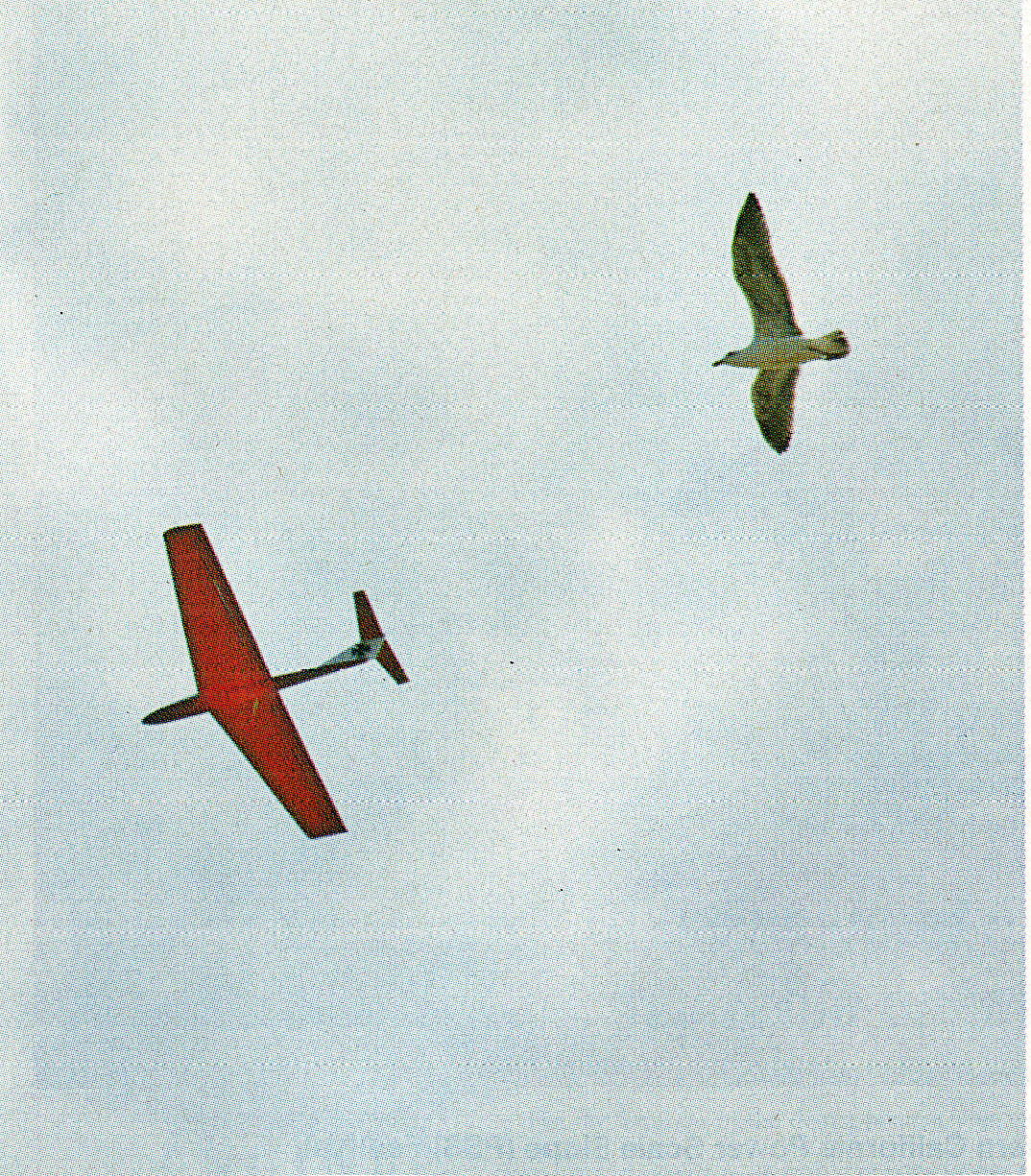
Selecting Slope Sailplanes: "It doesn't have to fly to work on the slope, it just has to turn." Almost any sailplane will fly on the slope, including HLGs, two-meter polyhedrals, full-house Unlimited Thermal Duration airplanes, and many specialized Slope models, most commonly two-channel aileronand-elevator hot rods. Scale airplanes are frequently seen in slope flyinggraceful "glass slippers," as we11 as warbirds and Slope jets.
A 60-inch-span HLG is an excellent starter airplane, particularly for exploring the lift band on a new slope, and especially for a light wind (say, five to 10 mph). A first-time Slope pilot who is familiar with his HLG launches it out from the hill into the anticipated lift band, and if it goes up, he is flying in slope lift.
These same conditions will support balsa open-bay-wing polyhedral airplanes such as Goldberg Gentle Ladys, Great Planes Spirits, and Whyte Wings Olympic Ils.
In 10-15 mph wind the polyhedrals will fly but may need to be ballasted to penetrate upwind and stay out in front of the hill. In medium wind, the aileron-and-elevator Slope airplanes come into their own, such as the Sig Ninja, Northeast Sailplane Products Dove, and the Bob Martin Coyote.
For that medium wind, we have a new genre of Slope sailplanes made from EPP foam—a miracle material that absorbs terrific abuse and returns quickly to its original shape. These airplanes are available from several makers. The EPP airplanes take lots of abuse and make excellent trainers as well as explorers to test the lift on a new slope. "Rubber airplanes" build confidence quickly.
In high wind (more than 20 mph), racers, Slope screamers, and Scale airplanes come out to play, among them the CR Aircraft Renegade, the Bob Martin SR-7, Northeast Sailplane Products Sparrow, Slope Scale WW II warbirds, and a wide variety of imported and domestic Scale sailplanes.
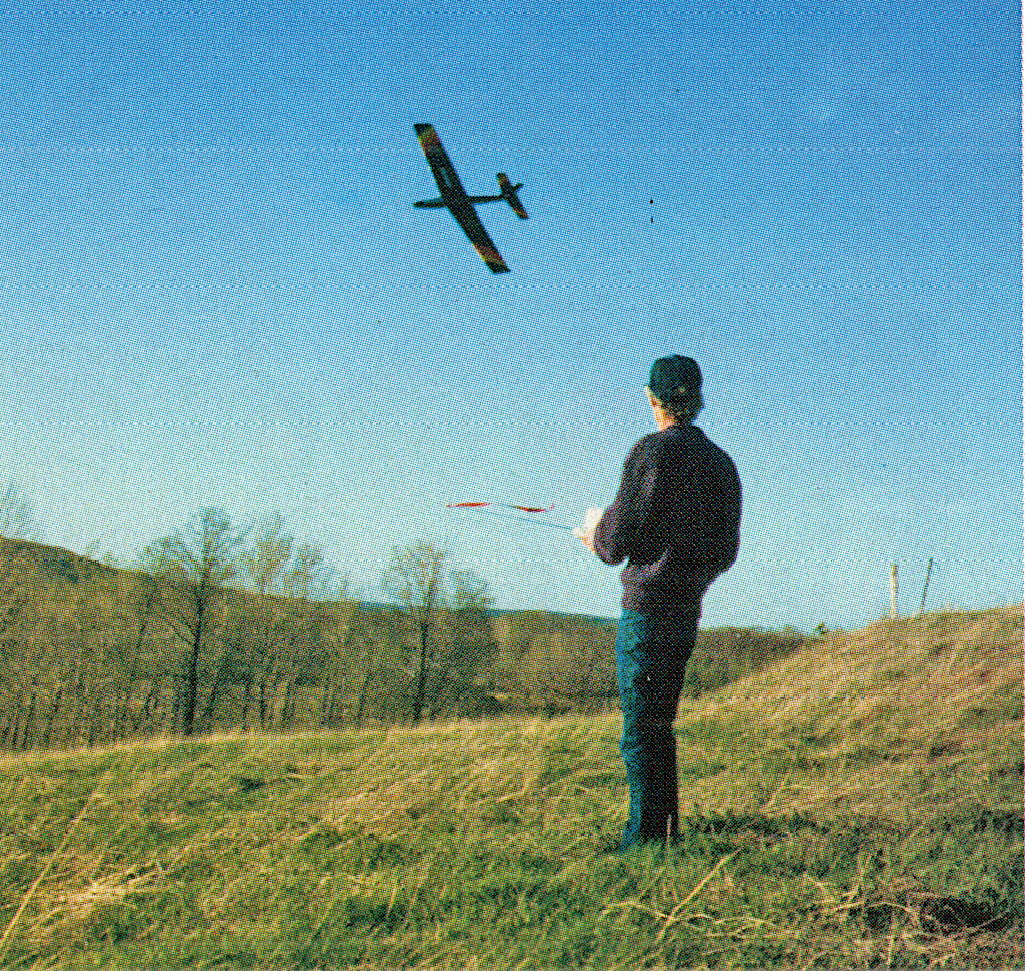
How to Fly In Slope Lift: To be successful in Slope Soaring, you need to have basic RC flying skills. You need to be able to launch and land your sailplane, to maintain airspeed, and avoid stalling, and to be able to handle the apparent roll-control reversal when the airplane is flying toward you. These skills may come from thermal sailplane flying, RC power flying, or they can be developed on the slope if you approach the task with determination.
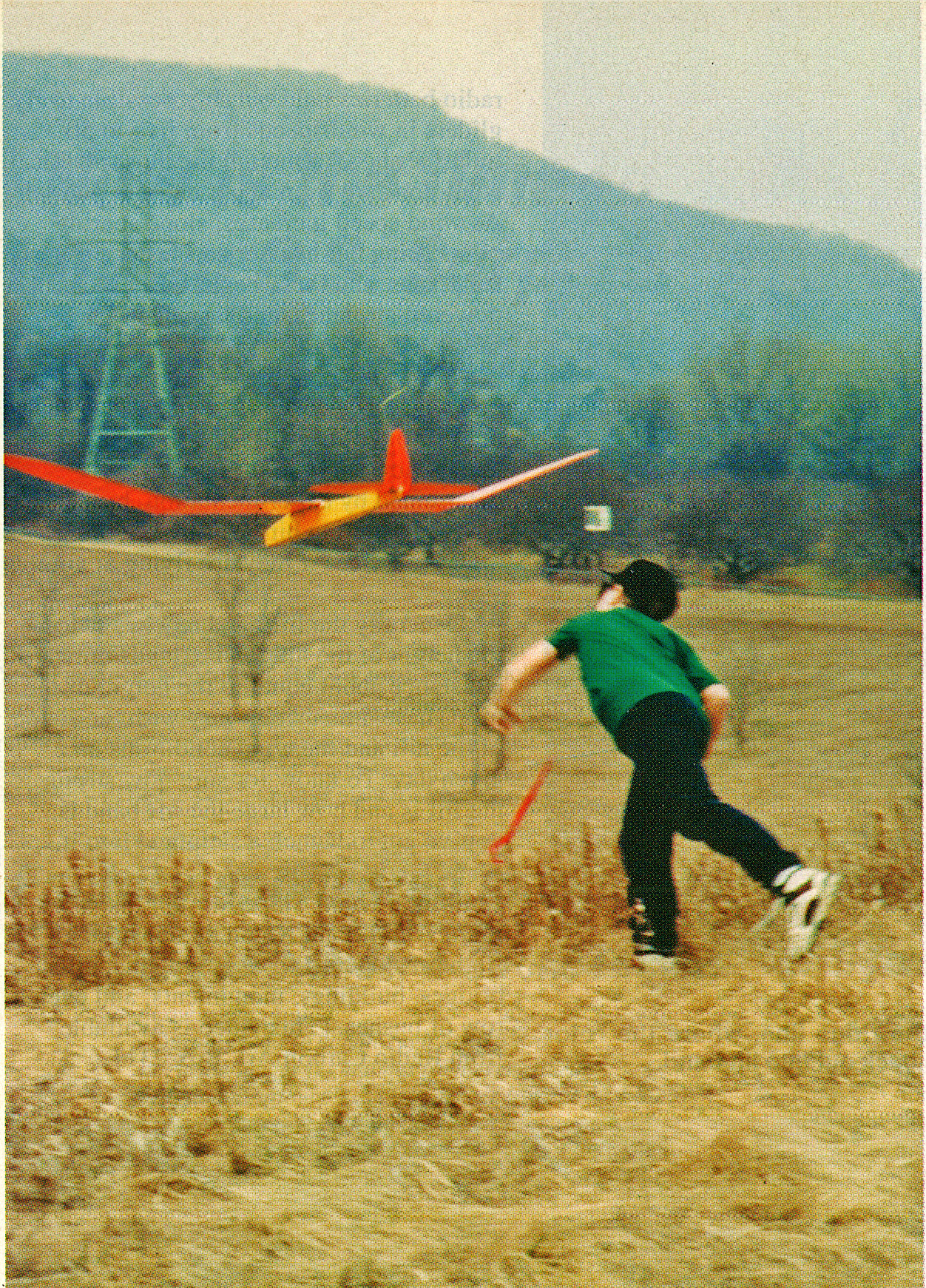
To launch into slope lift you throw the airplane down. Hand-launch sailplanes are heaved up when you launch, as are thermal sailplanes; but to launch a Slope soarer, you launch downward.
On launch, speed is far more important than altitude. If the model gains flying speed, it will soon have altitude, but if it stalls on launch, it will crash immediately. The heavier the sailplane is, the more important it is to launch in a downward direction.
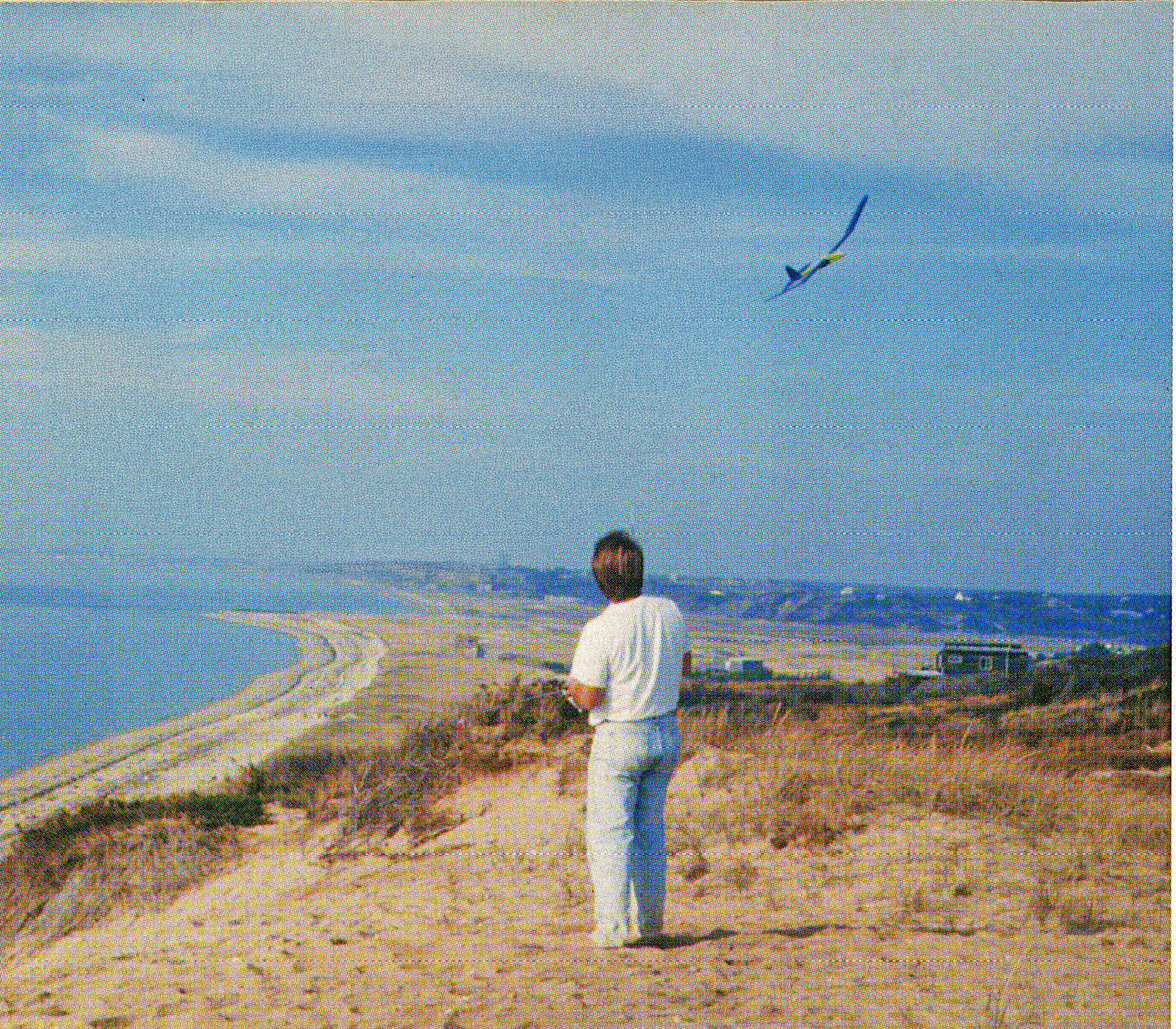
After release, be prepared for quick reactions on the sticks. Generally, Slope flying is far more active than thermal flying, and you have to be flying the model all the time to keep it where you want it: safely in the lift zone and away from the ground.
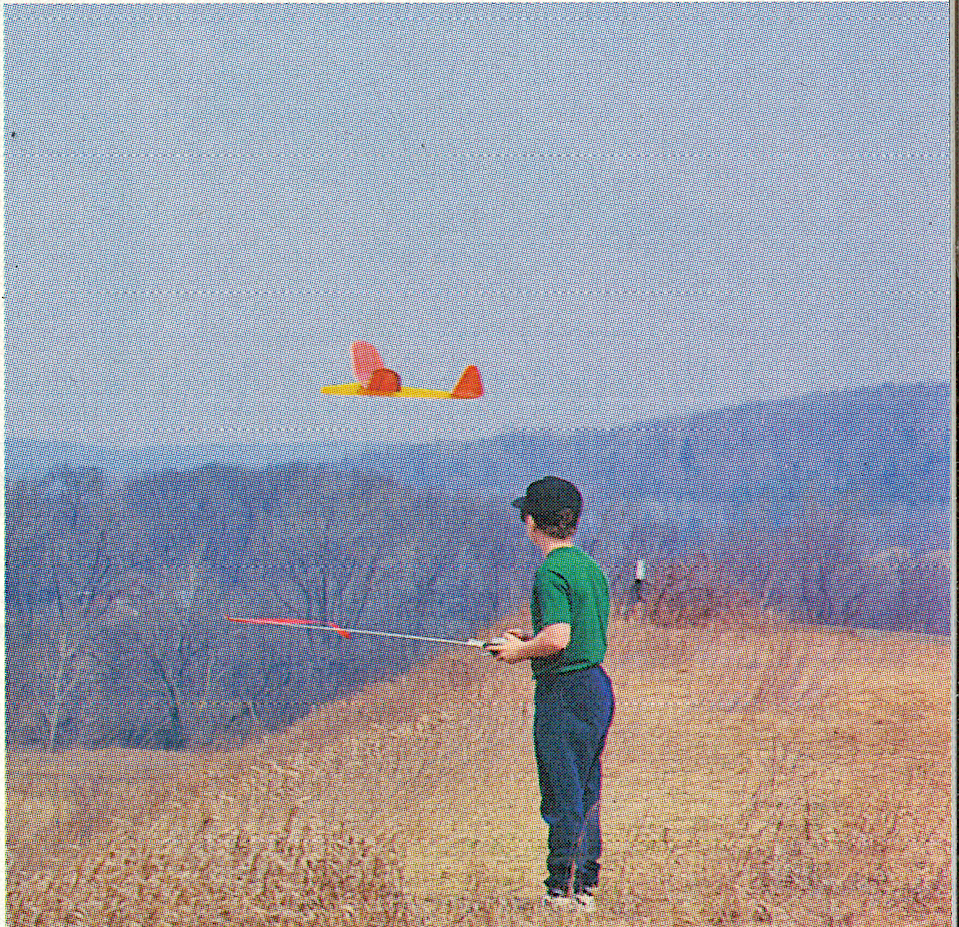
A few seconds after release, the sailplane reaches flying speed and follows a path away from the pilot and away from the hill. Remember that lift decreases as the distance from the hill increases, so you'll make a turn to keep the model in the lift band parallel to the hill and fairly close to it. After the first turn, the model is flying parallel to the hill.
Before it gets too small to see, make a 180° turn away from the hill and into the wind. The model will pass the pilot going parallel to the hill, and before it gets too far away at the other end, make another 180° turn and fly back toward yourself.
Slope turns are made away from the hill and into the wind, and the basic Slope Soaring pattern is a Figure-8 when viewed from above.
You've made one complete circuit. As you complete more circuits, your airplane will gain altitude. This may be all you do or all you need to do for the first few sessions. It's amazing to see your airplane flying out and back, passing close by at eye level or below, cruising on unseen lift, with the loudest sound being servo gear noise.
After getting the feel of the basics, your first "mission" may be to explore the limits of the lift available. You'll find that the strongest lift is close to the ridge and near its top. As you venture out, the lift gradually softens. If.you get out too far and begin to descend, just fly back close to the face of the hill and work your way back up to the top.
You will definitely want to avoid flying behind the top of the hill. As the wind flows over the top of the hill, it becomes turbulent and the lift component decreases sharply. Slope pilots call the danger zone behind the hill crest the "rotor." It is not a good place to fly; stay out front at all costs.
For landing you have three choices. In order of increasing skill, they are: at the bottom, on the slope face, and on the top.
For landing at the bottom, you simply fly out away from the hill into softer and softer lift. The model loses speed and altitude, and as it gets lower the lift decreases. You land the model at the bottom as you would a thermal glider by raising the nose to reduce speed and fly it smoothly down to meet the ground. This is the safest landing procedure; its chief disadvantage is that you have to hike down the hill to get your airplane.
The slopeside landing begins the same way, but when the model is well below the hill crest, bring it back toward the slope and let it regain altitude. As it climbs, speed will be lost and you land it like a thermal sailplane, by flying low enough to scrape it along the ground. You won't have to walk as far to collect the model.
For the experienced Slope pilot, the hilltop landing is the way to go. Start with a downwind leg (the only time you turn downwind), lose some altitude on the crosswind leg, and turn on final into the wind. The trick is to maintain control while flying through decreasing lift and increasing turbulence.
You must keep the airspeed high to maintain control. You'll be landing "hot" when you land on the top of the hill, but there's one advantage to this technique: you can go around. Just shoot back out into slope lift if you don't like the approach.
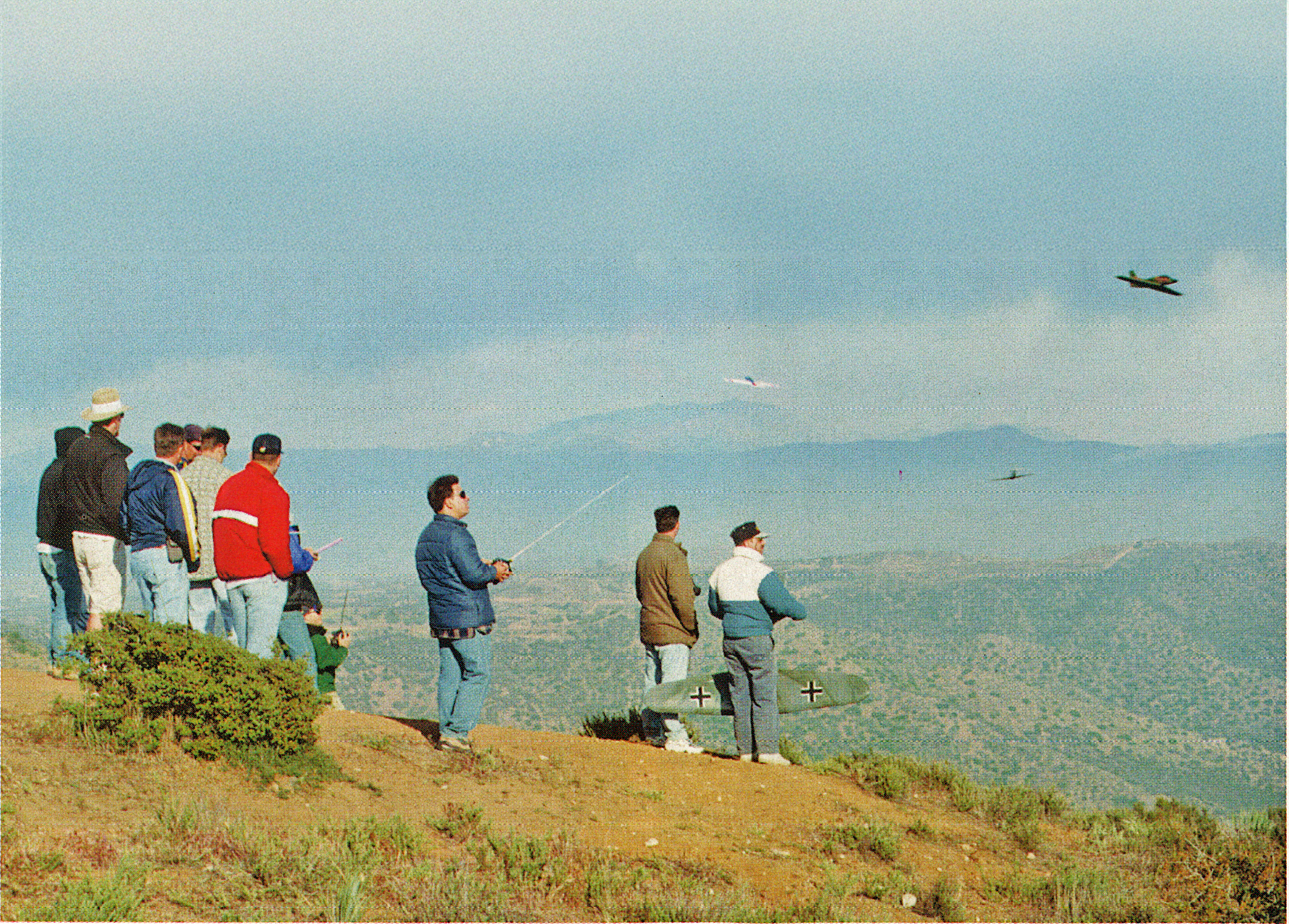
Final Tips: RC Slope Soaring is interesting, exciting, and amazing. The scientist in us is interested in how slope lift works. Fuel power pilots are excited at how much aerobatic flying can be accomplished without noise and vibration. Thermal Soaring enthusiasts are amazed that a single flight can last two hours or more.
Nearly all RC pilots will be amazed at how much wind you can actually fly in. Slope pilots may have signs in their workshops that say, "When it's too windy to fly power, go to the slope." You may want to bring a windproof jacket.
Things happen fast on the slope, and models get beaten and battered more here than in flat-field flying, so bring a repair kit. If you can find an instructor, you may be able to avoid some dumbthumbs crashes. A buddy-box radio system is highly useful in the first few flying sessions.
If these aids aren't available, don't give up; plenty of people have taught themselves slope soaring, including myself. It was a little rough at times, but it was worth the effort. It's even easier to teach yourself in these days of rubber sailplanes.
SOURCES:
League of Silent Flight
www.silentflight.org
Radio Carbon Art
(888) 834-2261


Comments
Add new comment