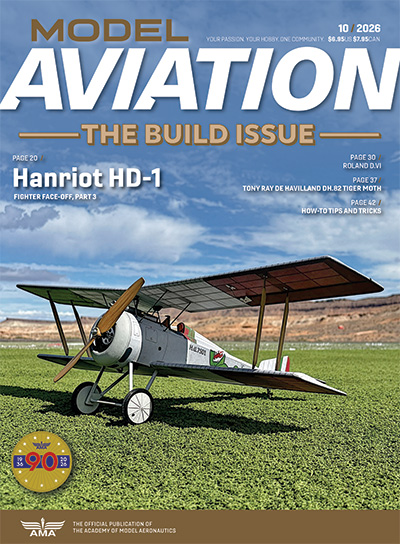
As seen in the June 2026 issue of Model Aviation.
A smile is the universal welcome.
—Max Eastman
For some of you, flying season is ramping up; for others, it never stops.
We recently received an email from Dennis Haynes, an Introductory Pilot Instructor with the York County Flyers, club 1677, in York, South Carolina. Dennis shared the club’s approach to growing its membership. He wrote:
Here are some key factors we have found that make our club successful:
- Enthusiastically greet everyone who visits your club—even if they are sitting in their car in the parking lot just watching. Don’t let anyone stand around. Be the first to approach them.
- I start off with, "What did you bring to fly today?" That gets them talking about why they came to visit and their interest and experience with RC flying.
- Explain your club’s introductory RC flying program. (You do have one, right?) That provides a good no-cost, "try before you buy," positive experience.
- This goes for allclub members, not just the officers: Everyoneneeds to be an "ambassador" for your club.
- Have designated RC pilot instructors who are readily available to help teach new students and be able to conduct introductory flights using the club’s trainer airplanes and equipment.
- Our introductory program consists of an hour on the simulator and three buddy-box flights. After that, they should know whether this hobby is for them and whether they need to make an investment.
- We have a HobbyZone AeroScout and two E-flite Turbo Timbers for club trainers. Keep it simple— no gas or kit airplanes. We also have batteries and a few Spektrum DXS transmitters with which to buddy-box.
- A flight simulator is essential and dramatically improves a new student’s performance in the actual hands-on flight training.
- Having a student RC training manual is a big help for new pilots. It shows them the basics of RC flying and a path to being proficient.
- You absolutely must designate a club officer who is responsible for reaching out and contacting any new member within 48 hours!
- You want the new member to feel welcome to your club and that they matter.
- You need to know what their experience level is and whether they need to be paired with an instructor. If so, get them together.
- Make it fun and interesting!
- Have events for just the club members and invite any new potential members. Have a club family fun day with hot dogs and hamburgers.
- At your monthly club meeting, have a simple RC training session. You will be surprised by what people don’t know and what they are afraid to ask questions about.
In the end, keeping your club soaring isn’t just about airplanes—it’s about lifting people up so that no one’s left grounded!
Until next time!


Comments
Add new comment