A veteran CD and Scale builder takes a hard look at Sport Scale—types of ships that perform well, those best for competition, documentation. You’ll never regret reading this article.
By John D. Preston
As seen in the January 1978 issue of Model Aviation.
For most of us who have mastered the art of building and flying model aircraft, there comes a time when the flight of a new model becomes almost assured and flying for its own sake approaches boredom. At this point, many of us start thinking about the aircraft of our dreams; one which probably got us into the hobby in the first place. I'm talking about a Scale model of an aircraft that, as a child, we dreamed of flying. It may have been the Piper Cub belonging to a neighbor that was the first airplane in which we flew. On the other hand, it could have been the B-17 flown by Col. Savage in the movie Twelve O'Clock High. Both are available as model kits and are fully capable of RC flight under our command. All it takes to fulfill our dream is time and money.
The purpose of this article is to share with you some experiences gained, as both a contestant and a judge, at RC Sport Scale contests, in the hope that you can avoid some of the pitfalls that can quickly deplete your investment of time and money and shatter your dream airplane in a lot less time than it took you to build it.
By now, you are probably wondering what your dream aircraft has to do with entering a Scale contest. Most of us, when we choose a first Scale model, will pay no attention to how suitable it may be for competition flying. Why should we? We are not interested in competing against others, but only in fulfilling a dream. This is the time to be prepared. I'm betting that the majority of modelers who build and successfully fly a Scale model will consider entering a contest sooner or later. After receiving much applause for the model's appearance and realism in flight around the local club field, we begin to wonder how it would rank against the Scale models we see pictured in the magazines. It is at this time that we might wish that we had done some background research on what is needed for a contest. That is not important when just flying for flying's sake around the local pea patch.
First, let us discuss the selection of your model. If you are bent on building your dream airplane, the selection may be already made. However, read on and see if your selection agrees with my observations on what is a good choice for a contestwinning airplane.
Without a doubt, a relatively heavy model of a military fighter or advanced trainer, preferably with tricycle gear such as a P-39, will reap you a generous reward when it comes to flying under the rules. In short, it will fly much like a Pattern airplane.
Such a Scale model should, in my view, not only look like the prototype but also fly in a similar manner. The first rule for a Scale model should be to build it light. This may be in direct conflict to what has been written by another, more famous, Scale modeler.
I never have subscribed to the lead-sled approach even without the bonus points for realistic flight. Let's face it, the argument to "build it strong so it won't break" doesn't work because strong means heavy, and heavy means fast. The product of heavy and fast equals high momentum which, in turn, means a broken airplane if it crashes. The light and slow model will probably also break if it crashes, but the damage is not likely to be any more serious than would be sustained by a lead sled.
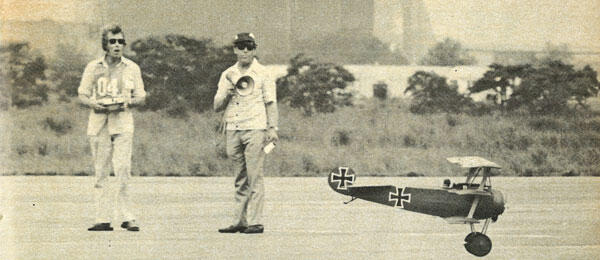
As an alternative to building a lightweight model, we can achieve more realistic flight speeds by building to a larger scale. Many East Coast modelers are familiar with some of the large models built by Bob Karlsson of Wilmington, Delaware. For realism in flight, Bob's Ryan P-22 would be hard to beat. The current discussion of a new 1/4-scale category has, as its prime objective, realism in flight. The weights of your radio and engine become smaller when expressed as a percentage of total model weight when you build large models. Even a World War I fighter with its short tail moment and narrow gear can be a relatively docile bird when built to a large scale. This was evident to anyone who saw Tony Lunt flying his 1/4-scale Fokker DR-I at the Airolympics in 1974.
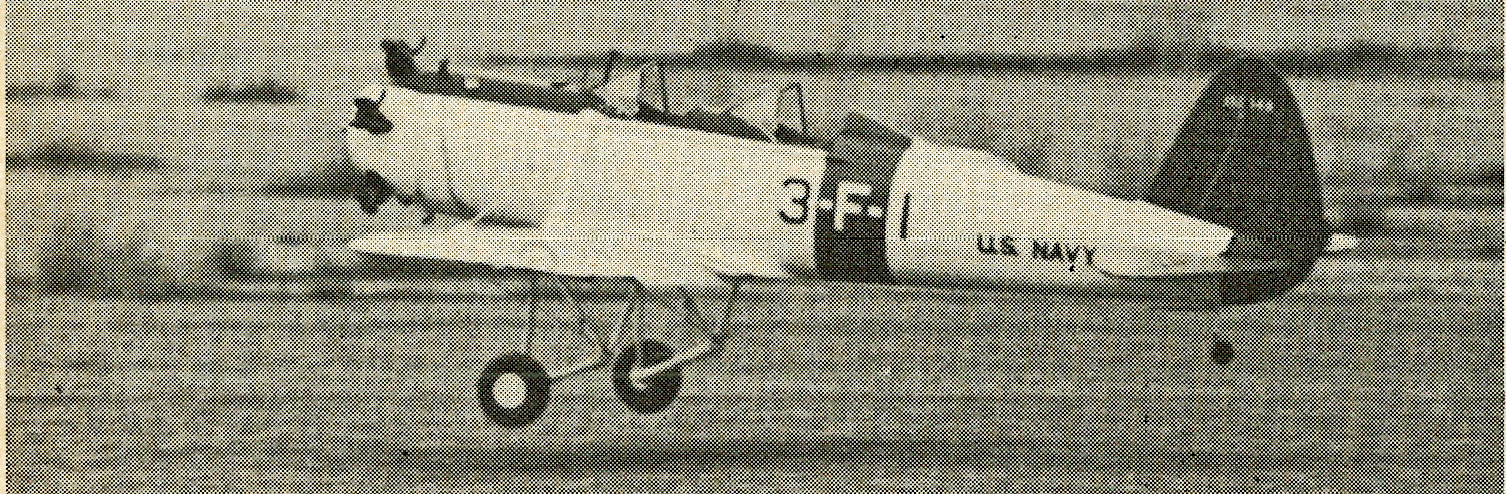
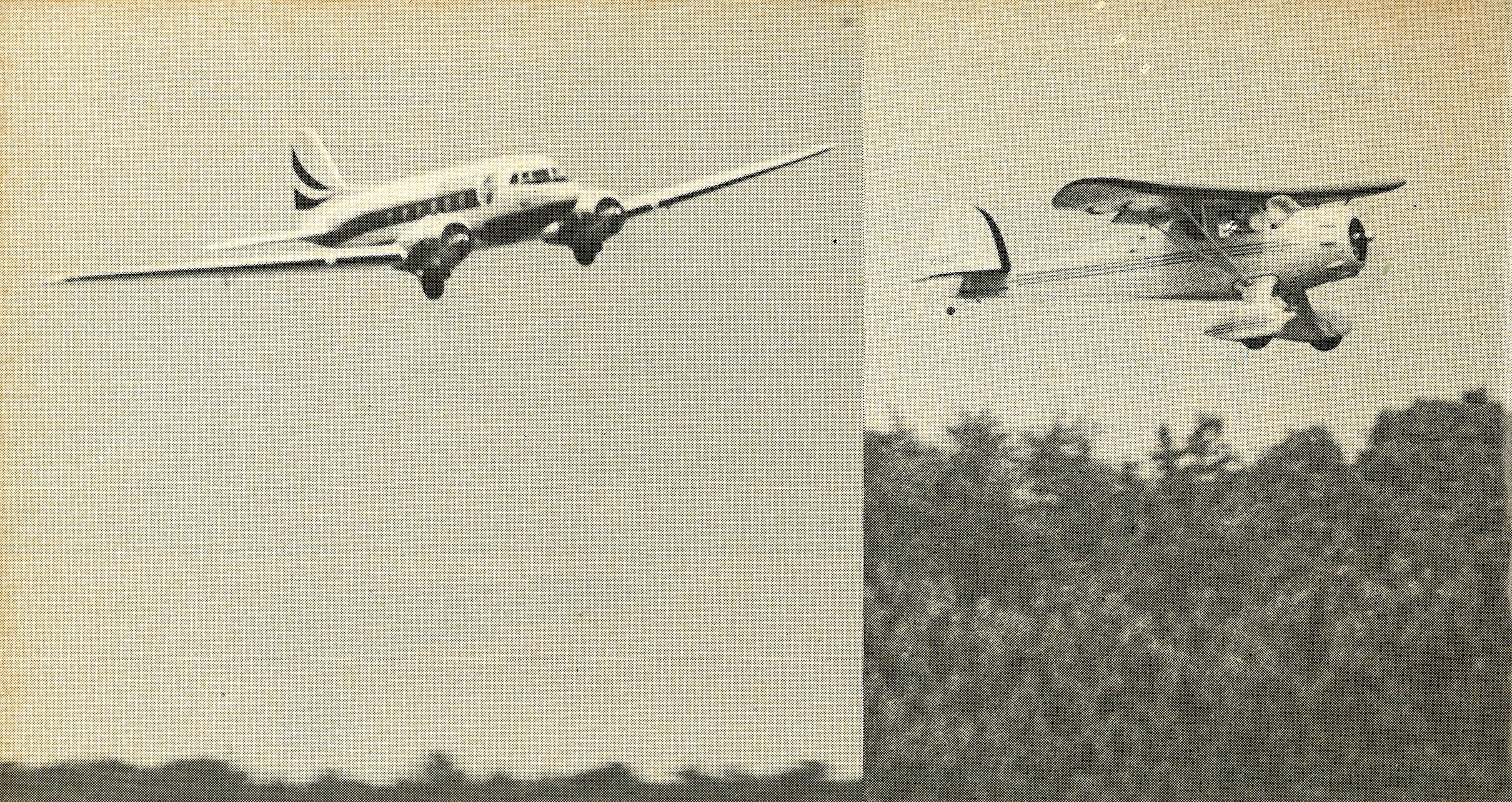
If you now are sold on a large lightweight model rather than a small heavy one, let's discuss my previous recommendations of tricycle landing gear. Unfortunately, most of the "classic" aircraft which are likely to exist as our dream aircraft are tail-draggers. The advantages of the trike gear should be obvious. Less chance of nosing over on takeoff and landing and ease of steering on the ground. If we are stuck with modeling a tail-dragger, consider the following: Ground handling is improved by wide track (distance between wheels), long tail moment, big wheels and, for some reason, by having as small a change as possible in the wing angle of attack between the model at rest and when in flight.
I have a Monocoupe 90A which violates two of these recommendations by having a short tail moment and a rather large positive angle of attack in its at-rest position. As a result, takeoffs are usually somewhat shaky and the landing rollout, particularly on hard surfaces, ends with a ground loop more often than not. This hurts my flight score badly when competing against, say, a P-39, especially when the contest is at the local air base, and the hard-surface runway being used is oriented crosswind. (They invariably are.)
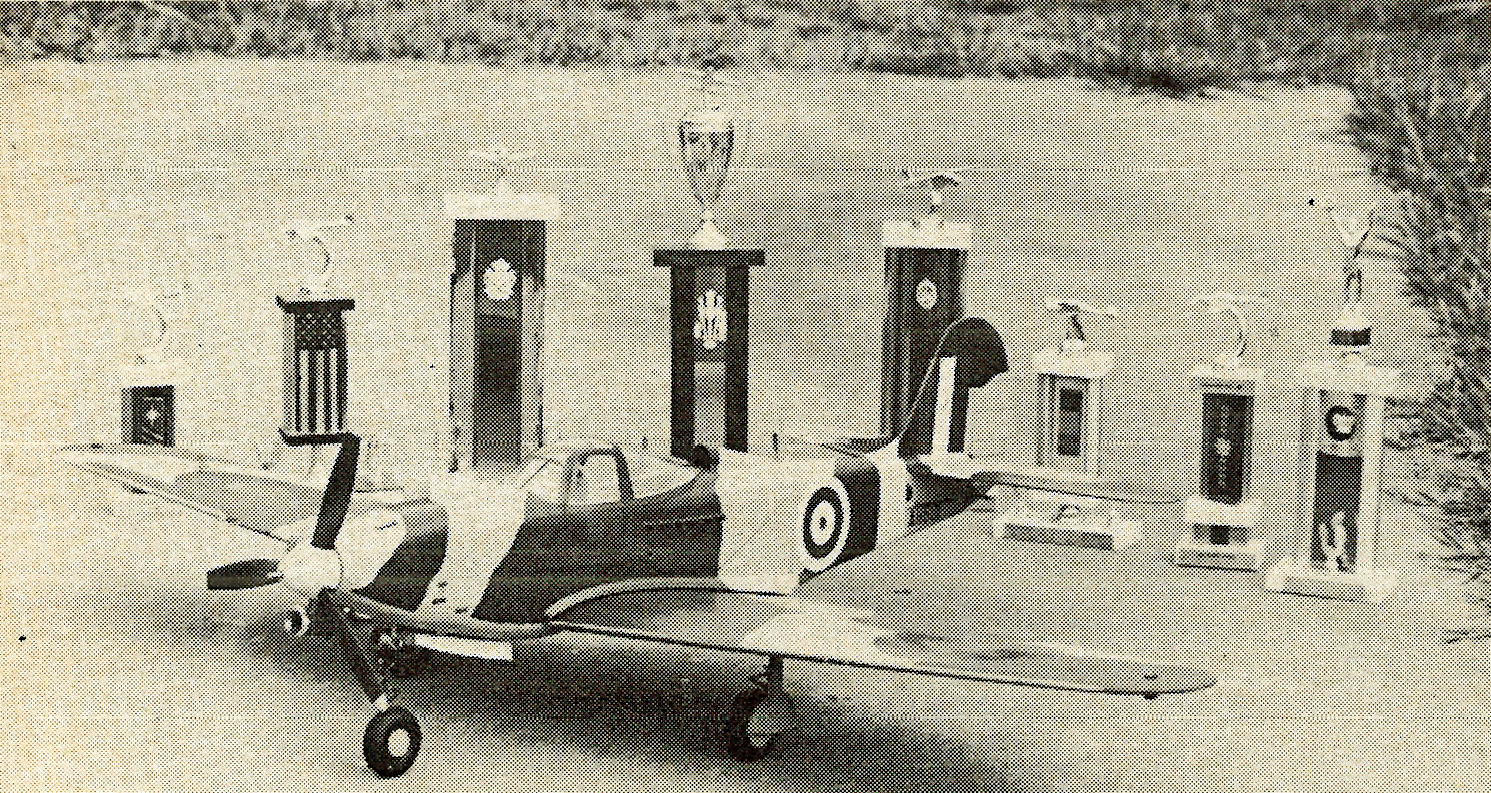
Another factor to consider before building that dream model is the flight maneuvers that you will perform. Let us suppose your model selection is an Aeronca C3. Besides the five mandatory maneuvers, you must also perform an additional five of your own choosing. A full-scale C3 is guaranteed to turn heads at the local airport, but not because of its dazzling flight performance. With a model, one could perform as options the three old 'A' Pattern maneuvers of straight flight out, procedure turn, and, straight flight back, but loops and rolls definitely are out. For the remaining two options, one could do a touch-andgo (scored as two options), but remember, it is a tail-dragger, and a nose-low touchdown may kill the engine and end the flight right there.
Some competitors believe that the straight flight out and back should be eliminated because they are really not maneuvers. Such a move, however, would all but eliminate a lot of classic aircraft from Scale competition simply because the fullscale counterpart was not approved for aerobatics, and what else can you do with it to satisfy those five options? In my opinion, it would be much more difficult to score well in straight flight with an Aeronca C3 than by performing one loop with a P-51. When the rule book says "straight flight," it means just that. No change in altitude, no deviation to right or left, and wings level all the way. Almost impossible with a C3 in a gusty crosswind. So my second rule for selection of a Scale model is think ahead and decide if it will perform five easy maneuvers or scale operations.
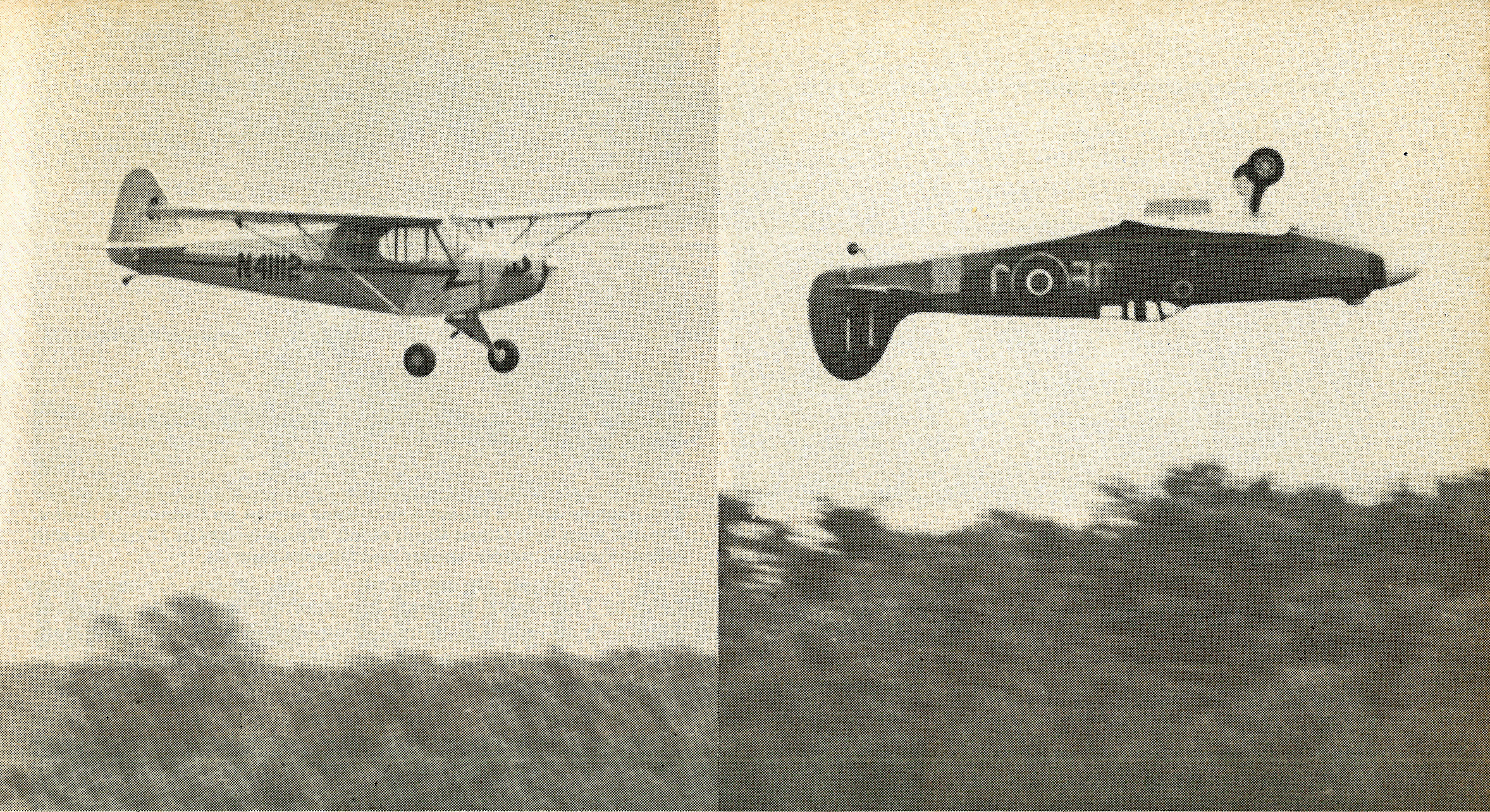
On the subject of scale operations, remember that dropping one bomb is much more likely to gather 10 points than a Lomcevak. But remember that you don't get an automatic 10 just because the bomb drops from the model when you call it. The approach to the release point should look like a bomb run and the bomb should release on cue and not turn end over end as it falls (napalm types excepted), if you expect to score 10 points.
Another scale operation which many may think is a dead giveaway is operation of flaps. I have received both 10s and zeros for flap demonstrations with my Monocoupe. The zero was awarded by a judge who claimed he was not able to see the flaps move during flight. This was after they were cycled down and up four times during the flight (takeoff, missed approach, a separate flap demo, and landing). I am now reluctant to use flaps as an option, but I still use them for landings since the trim change (nose-up) is advantageous in keeping the model from nosing over during the landing.
Even though you may elect not to use flaps in lieu of a flying maneuver, they may be used to your advantage during static judging. A Corsair or SBD Dauntless both look great sitting on the tarmac with a vast expanse of flap hanging down. Also, like my Monocoupe, flaps can be useful to increase the realism of your landings by slowing you down and avoiding the controlled crash typical of the average sport/Pattern flier with a trike-gear model.
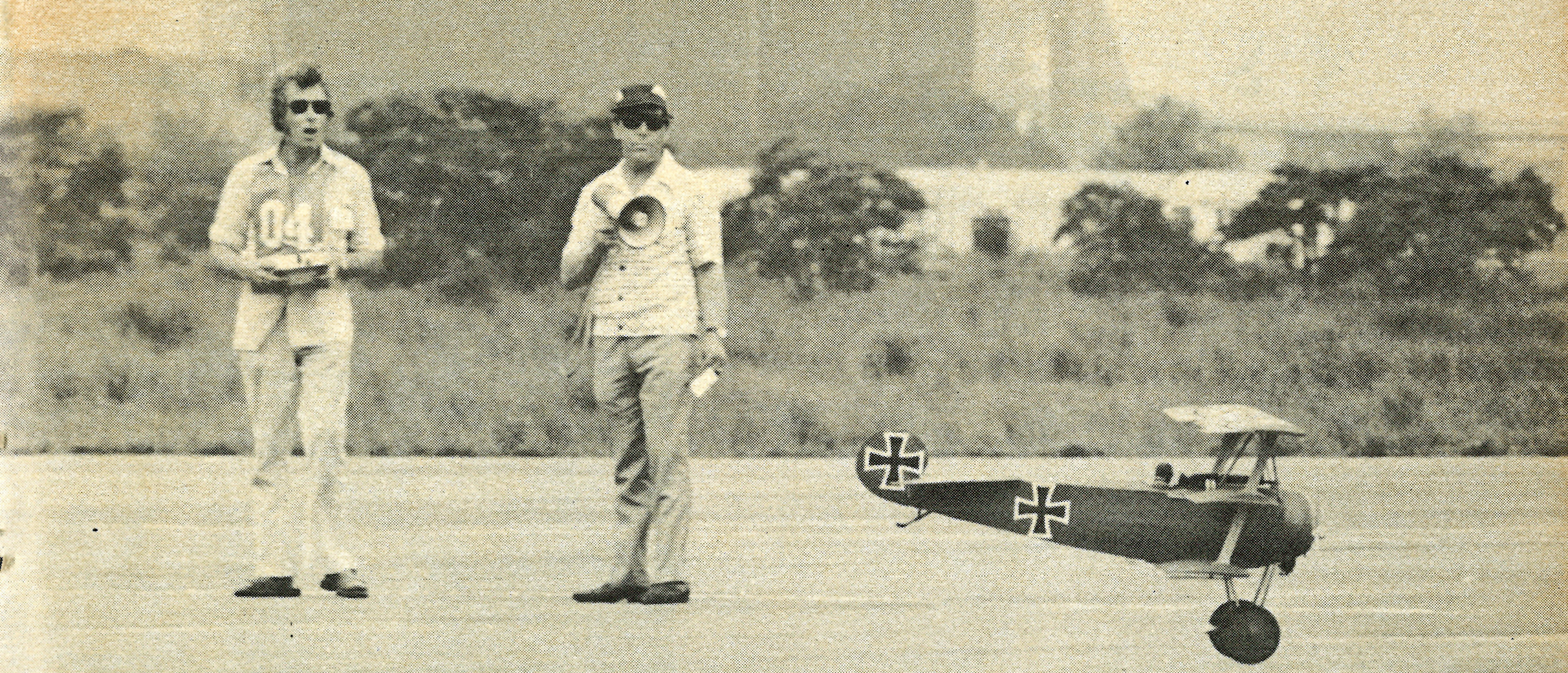
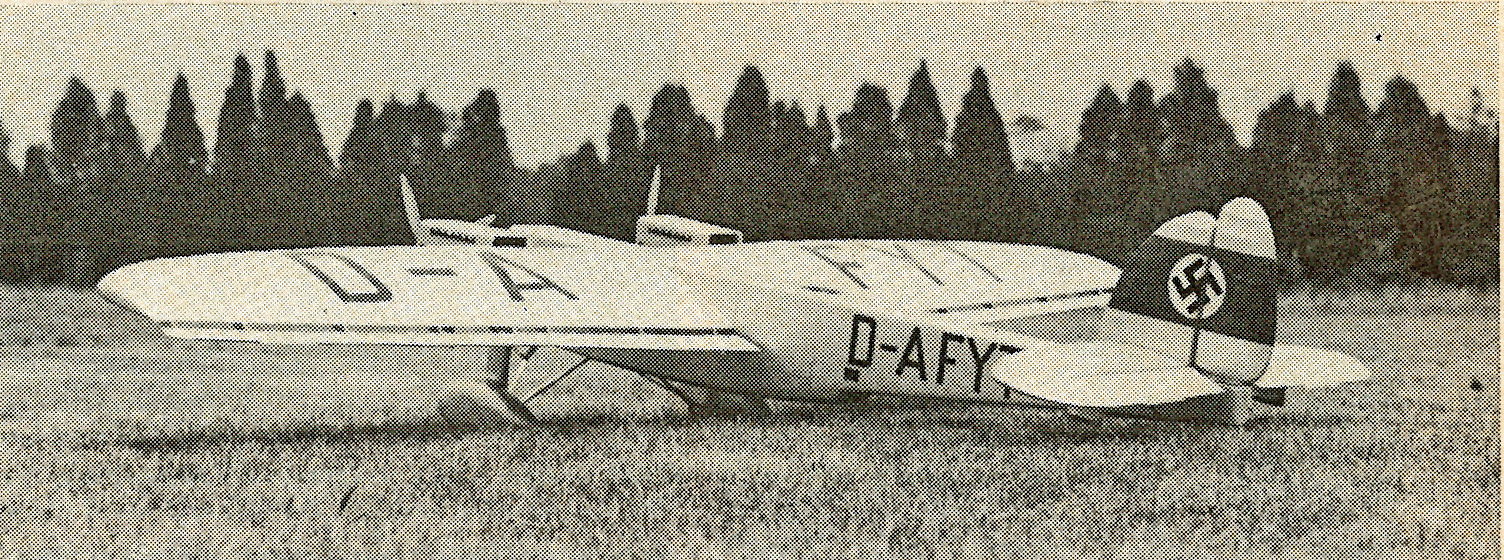
One final comment about flying points. Bear in mind that a twin-engined model can score an easy 20 points just by having two engines. I would not recommend, however, building a twin as a first Scale model. Remember that no flight option scores an automatic maximum, and the loss of one engine on a twin very often results in the loss of more than just some flying points. Another factor which makes the twin-engined model less than ideal is lack of realism in flight. Many twin-engined subjects have insufficient wing area to enable the modeler to achieve the desired wing loading. The result is the lead sled with dazzling (in terms of speed) but rather unrealistic, flight performance. One exception to this is a Dornier 23G which has been seen in the skies around Washington, D.C. The modeler, Don Srull, of McLean, Virginia, is noted locally for his lightweight building techniques, and deliberately chose this subject because the huge wing and thick aerofoil would enable flight at realistic speeds. Don took third place in Sport Scale at the 1977 Nationals with this model, which confirms his choice.
Let us turn now to static judging and see what it takes to get a good static score, without which even a perfect flying model will be out in the cold when it comes to total points earned. For realistic appearance, the Piper Cub is a whole lot easier to duplicate in model form than the B-17. The same applies to the majority of fabric and dope aircraft when compared to metalskinned birds. I know of no satisfactory method of duplicating unpainted metal on a model, short of using metal itself. Fortunately, the majority of metal-skinned airplanes, particularly those which bring waves of nostalgia to modelers, were finished with paint. However, I firmly believe that for a newcomer to Scale modeling, a satisfyingly impressive finish is easier to achieve on a stick-and-string type of aircraft than on a metal-skinned one. If finishes are your forte, then go to it and by all means build that weathered P-47 with rivets and panel lines, etc. Although the rule book instructs judges to ignore details not deemed visible in flight, if two otherwise identical models are placed side by side and one has rivet details, etc., and the other has only a smooth paint finish, you and I both know who will get the highest score.
The important thing to bear in mind is that what can be seen at 10 feet is going to be judged. Naked piano wire landing gear legs are a frequent cause of lost points. Similarly, biplanes with no bracing wires will not score high. When I am static judging at a Scale contest, all entries start with maximum points. As I see omitted details or incorrect color or markings, the points start to be deducted. The more errors I see between your Scale documentation and your model, the less will be your final static score. So be sure to add all the obvious features that show on your documentation.
This brings us to the subject of the proof-of-scale documentation. It was the absence of Scale documentation on the part of several contestants at a recent Scale contest that made me think that this article might be of some use. You would be surprised how many times someone will enter a contest just to see how their model will rank against their fellow modelers. However, these same contestants will be without a three-view drawing or will have nothing to show that the chosen color scheme did exist on a full-scale aircraft. Without these vital pieces of paper, the judges can only award you craftsmanship points, and since you can only score a maximum of 30 points, your chances of placing will be dim.
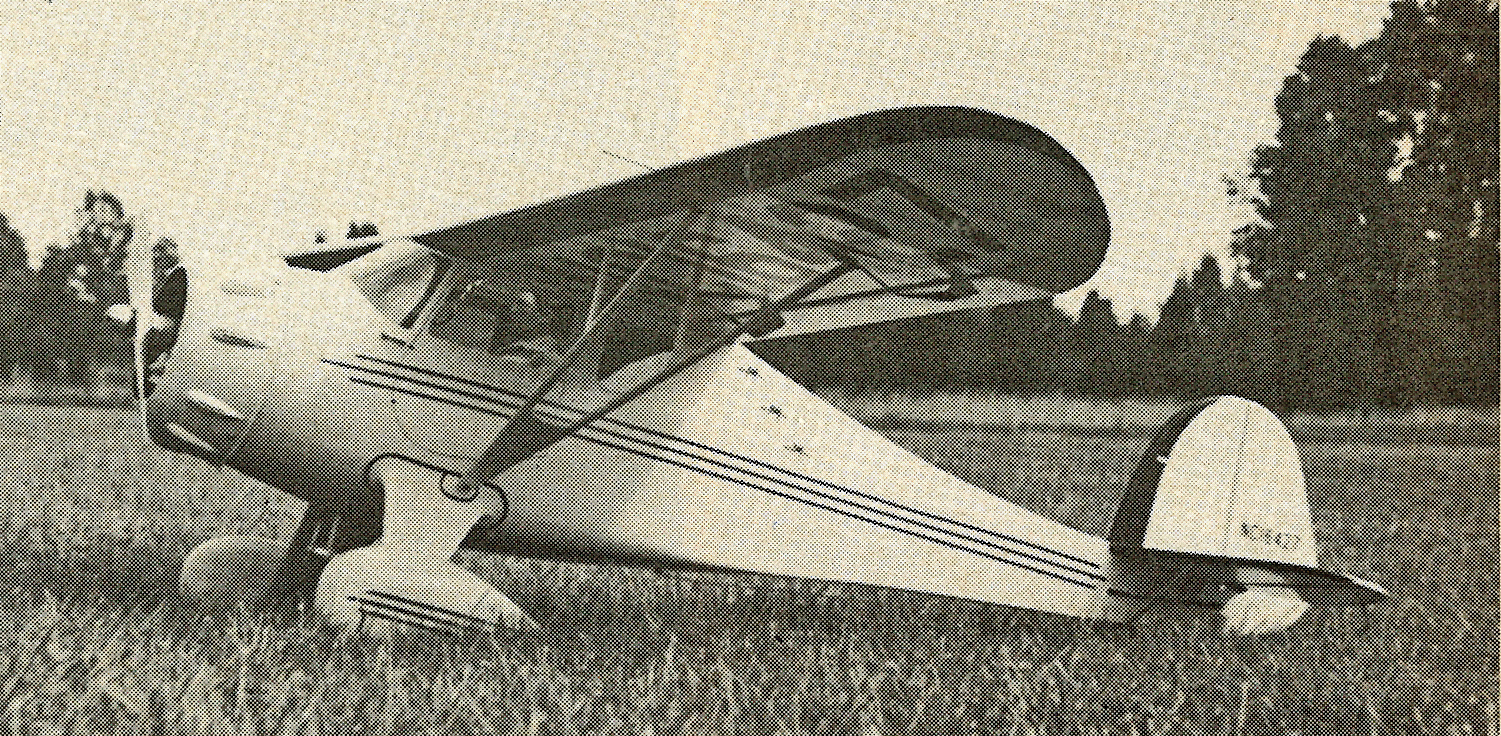
Very few aircraft which are available as model kits have not been the subject of a magazine article or even a book. Model magazines are constantly featuring articles about full-scale aircraft and usually include both three-views and photographs. The best proof-of-scale source is the full-scale aircraft itself. This should present no problems, if it is a Piper Cub or some other aircraft that proliferates the local airport. The B-17, however, is not likely to be found locally. If you do have access to the full-scale aircraft, an afternoon with a camera should produce the necessary documentation.
Beware, however, of poor exposure and processing. The colors taken with the family camera may bear little resemblance to the actual subject. Especially difficult to photograph are aircraft displayed in museums lit by fluorescent lights. I have not discovered a satisfactory filter to correct the colors of either daylight or tungsten under fluorescent lighting. I find that your own flash unit is the most acceptable form of lighting a museum subject. If photographic presentation is to be used to document your subject, I recommend that you give the judges a minimum number of pictures to show the major features of the prototype. If you show closeups of details, be sure that these same details appear on your model. Another reason to build to a large scale is that details such as venturis, navigation lights, fairings, etc. are easier to build when they are large.
One final note. Take a helper with you to that first Scale contest. I’ll guarantee that his hands will not be shaking like yours when, on the flightline, your “always start on the first flip” engine won’t even give a hint of a pop. Count on everything going wrong at a contest, and with this in mind, work out ahead of time with your helper, who is responsible for what. If you do this, you will automatically be prepared.


Comments
Add new comment